 How-to
Can You Detail a Car Interior Indoors? A Practical Guide
Last Updated: November 21, 2026
Quick Summary
Yes, you can detail car indoors, and for interior work it is often the smarter choice because a garage gives steady light and no wind or sun interfering with products. Indoor detailing is safe when you control airflow, moisture, and chemical exposure.
- Leave the garage door open at least partway or run a fan pushing air out.
- Damp carpet or seat foam can grow mold within a couple of days.
- A thorough interior detail takes most people two to four hours.
- Clear a footprint at least 3 feet wider and 4 feet longer than the vehicle.
- If humidity is above about 60%, run a dehumidifier or keep air moving.
Table of Contents
- Is It Safe and Practical to Detail a Car Indoors?
- Car Interior Detailing Tools You Need for an Indoor Job
- Steps to Detailing a Car Interior: A Room-by-Room Method
- How to Detail a Car Interior Like a Pro
- How Long Does Interior Car Detailing Take?
- Indoor Setup, Spill Containment, and Weather Considerations
- Book a Climate-Controlled Bay for Your Next Interior Detail
- Frequently Asked Questions
Is It Safe and Practical to Detail a Car Indoors?
Yes, you can detail car indoors, and for interior work it is often the smarter choice. A garage gives you steady light, no wind blowing dust onto wet surfaces, and no sun baking cleaners before you wipe them off. The catch: an enclosed space changes the rules. Indoor detailing is safe when you control airflow, moisture, and chemical exposure.
Ventilation and Product Safety in an Enclosed Space
Airflow is the first thing to solve. Interior cleaners, degreasers, and protectants release vapors, and a closed garage traps them at the height where you are working.
- Leave the garage door open at least partway, or run a fan pushing air out
- Never run the engine indoors to "warm up" the cabin
- Read the label on every chemical and follow the ventilation instructions
Watch out: solvent-soaked rags left in a pile can heat up on their own (Safety with Oily Rags). Spread them flat to dry or seal them in a metal can before you toss them.
Moisture, Drying, and Mold Prevention
Water is the quiet problem with indoor detailing. A closed garage holds humidity, and damp carpet or seat foam can grow mold within a couple of days.
- Extract or blot as much water as you can before you move on
- Leave windows and doors open after you finish, ideally overnight
- Run a fan or dehumidifier in the cabin if the air feels heavy
Car Interior Detailing Tools You Need for an Indoor Job
A basic indoor kit is smaller than most people think: the right few products, used in the right order, plus a handful of items that only matter inside a garage.
Cleaning Tools
- Vacuum with a crevice tool, a brush attachment, and a hose long enough to reach the trunk without dragging the canister across the paint
- Microfiber towels in two colors, one for cleaning and one for glass; a dozen 16x16 towels covers a full interior
- Soft detailing brushes for vents, seams, buttons, and the gap around the shifter
Indoor-Specific Gear
These items separate an indoor job from a driveway job, and skipping them is where most first-timers get into trouble.
- LED work light on a magnetic base or tripod, low-angle light reveals dust and cleaner film that overhead lighting hides
- Box fan or barrel fan positioned at the open garage door to push air outward
- Heavy tarp, drip tray, or foam mats sized to extend at least 2 feet beyond the vehicle on every side
Chemical Selection for an Enclosed Space
This is where indoor detailing differs most from outdoor work. In a driveway, fumes disperse; in a garage, they concentrate at the height where you lean over the seats.
- Choose water-based interior cleaners over solvent-based ones whenever the label allows; they off-gas less and are gentler on plastics
- Avoid aerosol products (spray adhesives, aerosol glass cleaners, aerosol protectants) in a closed garage, the propellant and fine mist hang in the air far longer than a trigger spray
- Skip ammonia-based glass cleaners if anyone in the household has respiratory sensitivity, and never mix them with bleach-based cleaners
Buying supplies locally saves a trip and lets you ask questions. Choosing the right cleaners is easier when you know which tasks belong in full interior detailing and which you can handle with routine upkeep.
One insider note: two colors of microfiber is not fussiness. Cross-contaminating grit from the door sills onto the dashboard is how scratches happen. Keep a dedicated "dirty" towel bin and a "clean" towel bin on the cart, because once a towel hits the garage floor it picks up grit that will follow it back onto the trim.
Steps to Detailing a Car Interior: A Room-by-Room Method
Work from the top down and from the back to the front. Gravity pulls dirt down, so cleaning the headliner and upper panels first means you are not re-cleaning the seats afterward.
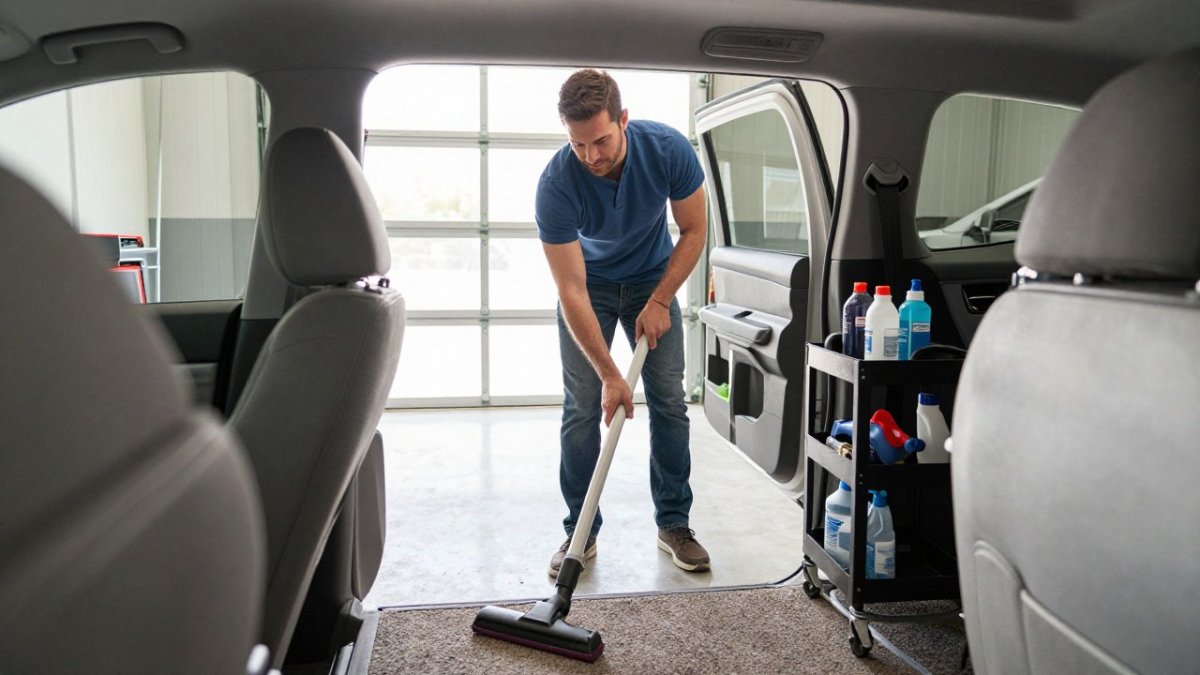
Prep, Vacuum, and Hard Surfaces
Start by removing everything that is not bolted down: floor mats, cupholder inserts, loose change, and the junk in the door pockets.
- Pull the floor mats and set them aside
- Vacuum carpets, seat seams, and the trunk
- Switch to the crevice tool for tracks, vents, and console gaps
Use a soft brush on buttons and vents. Spray the towel, not the surface, so cleaner does not run into electronics.
Upholstery, Mats, Glass, and Final Wipe-Down
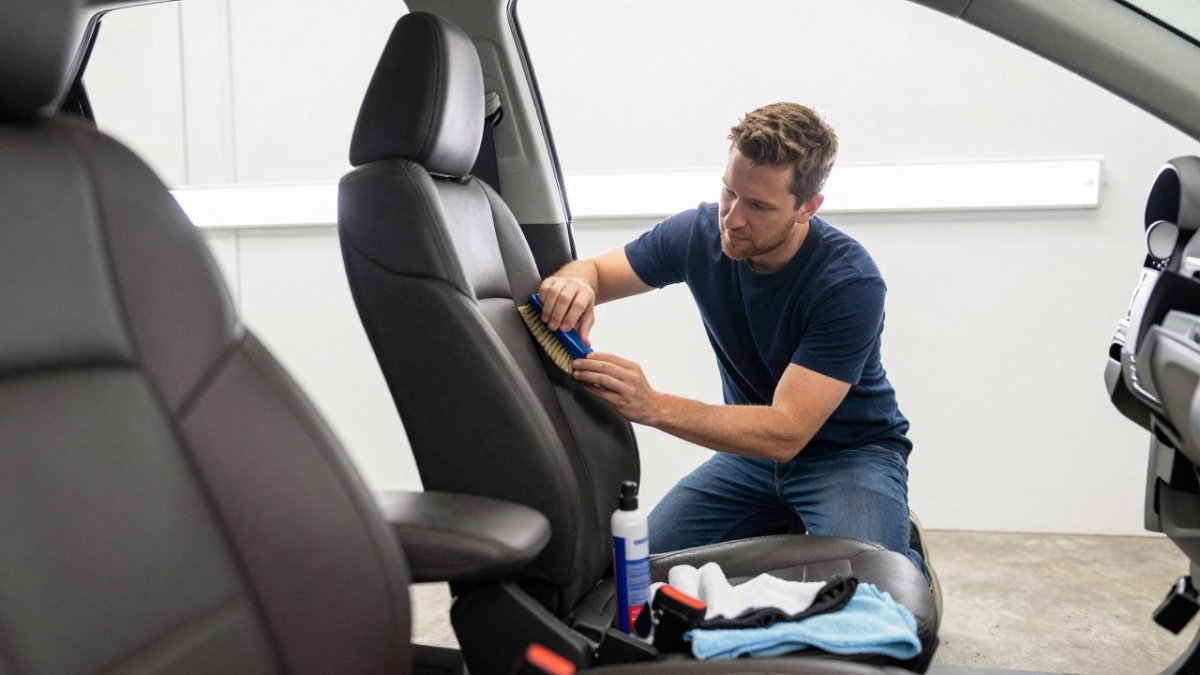
Now the surfaces that hold the most dirt. Vacuum fabric seats again, then apply upholstery cleaner in small sections and agitate with a soft brush. Blot, do not soak.
- Clean leather with a dedicated leather cleaner, then condition
- Wash floor mats outside the car if you can, and dry them flat
- Clean interior glass last, using a separate towel
Watch out: over-wetting fabric seats is the most common indoor mistake. Foam that soaks into the padding can take days to dry and leave a musty smell.
How to Detail a Car Interior Like a Pro
The pros are not using secret chemicals. They are working in a sequence and not skipping the boring parts.
- Remove trash and loose items, then bag them
- Vacuum top to bottom, including under the seats
- Clean hard surfaces with the right product, not the strongest one
- Treat upholstery in small sections and blot dry
- Clean glass with a dedicated towel
- Do a final walk-around with a light to catch missed spots
The biggest difference between a pro job and a quick wipe-down is patience on the details: seat rails, pedal edges, the gap around the shifter. For a deeper primer, read our guide on what professional car detailing is.
How Long Does Interior Car Detailing Take?
A thorough interior detail takes most people two to four hours. A quick maintenance clean runs about an hour. The gap comes down to vehicle size and how dirty the cabin is.
| Vehicle | Light Clean | Full Interior Detail |
|---|---|---|
| Sedan | 45-60 min | 2-3 hours |
| SUV | 1-1.5 hours | 2.5-4 hours |
| Truck | 1-1.5 hours | 3-4 hours |
Full Interior Detail
Add time for pet hair, spilled drinks, or heavy stains. Drying time is separate. If you wet-clean carpets, plan on leaving the car open to air out afterward.
Indoor Setup, Spill Containment, and Weather Considerations
Setup is what separates a smooth indoor job from a mess you clean twice. Treat the garage floor like a work surface you want to keep dry, and the air like something you have to manage.
Garage Clearance and Floor Protection
- Clear a footprint at least 3 feet wider and 4 feet longer than the vehicle so you can open doors fully and kneel beside the rocker panels
- Move bikes, lawn equipment, paint cans, and anything that off-gasses or collects dust at least 10 feet from the car
- Lay a heavy tarp, rubber drip tray, or interlocking foam mats under and around the vehicle; a 9x12 tarp fits a sedan, while an SUV or truck usually needs 12x16 or larger
Lighting and Power Access
Overhead garage lighting can cast shadows where you need to see. A rechargeable LED work light on a magnetic base or tripod lets you angle light across a surface at a low angle to spot dust, smudges, and leftover cleaner film. Check for at least one grounded outlet within reach of your vacuum and extractor, and route cords along the wall rather than across the walking path.
Ventilation Setup
Airflow is a setup task, not an afterthought. Position a box fan or barrel fan at the open garage door blowing outward, so it pulls air from the house side and pushes fumes and moisture out. Crack a window or the door to the house a few inches to give the fan a makeup-air path. Do not point a fan directly at wet upholstery, it drives cleaner into foam and dries the surface unevenly.
Spill and Overspray Containment
- Spray product onto a microfiber towel, not directly onto surfaces, especially near electronics, speakers, and seat switches
- Keep a stack of dry microfiber towels and a spray bottle of plain water within arm's reach for immediate blotting
- Place a shallow pan or tray under the extractor hose connection; a common failure point is a slow drip that runs down the hose and pools on the floor
Watch out: a wet garage floor plus a rubber-soled shoe is a slip hazard, and the risk climbs fast once you add overspray from glass cleaner. Wipe up spills as they happen rather than at the end of the job.
Temperature, Humidity, and Product Performance
Interior cleaners and protectants perform best in moderate temperatures. Cold conditions slow drying and absorption, and very hot, humid conditions can cause protectants to dry too quickly. If the garage is cold, a space heater rated for garage use can help, but keep it away from solvent rags and never run a fuel-burning heater in a closed space. If humidity is above about 60%, run a dehumidifier or keep the fan moving air through the cabin until the carpet feels dry to the touch.
Shared-Space and Property Rules
If you rent, live in an apartment complex, or share a garage, check the lease or HOA rules before you start. Many leases prohibit washing cars in shared garages, restrict chemical storage, or require that floor drains only receive clear water. Never pour extracted dirty water, upholstery cleaner, or rinse water down a garage floor drain unless you know where it goes, in many municipalities those drains connect to storm sewers, not the sanitary sewer.
Book a Climate-Controlled Bay for Your Next Interior Detail
You do not need a garage to detail car indoors. You can book a self-serve detailing bay in O'Fallon, MO for a climate-controlled indoor space with pro tools and products.
Here is the honest split: if you enjoy the work, book a bay and bring your own chemicals.
Your car's interior will not clean itself, and a cold, cramped driveway is not the place to fight it.
Frequently Asked Questions
Do I need ventilation to detail a car in a garage?
Yes. Interior cleaners, degreasers, and protectants release fumes that build up fast in a closed garage. Keep the garage door open at least a foot and run a fan to push air out. If you use aerosol products or strong solvents, ventilate for several minutes before and during use. A garage with no airflow turns a two-hour detail into a headache and can be unsafe with solvent-based products.
Can I use a pressure washer or hose indoors?
No. Pressure washers and hoses are for exterior panels, wheels, and floor mats only, and they belong outside. Indoors, water spray drives moisture into carpets, seat foam, and electronics, which leads to mold and shorts. For indoor work, use a spray bottle, a bucket with a small amount of water, and microfiber towels. Pull rubber floor mats outside to hose them down and let them dry fully before reinstalling.
What should I avoid when detailing my car indoors?
Skip solvent-heavy cleaners in a closed space, avoid soaking carpets or seats, and never leave windows up while chemicals cure. Don't run a shop vac with a clogged filter, and don't use a pressure washer inside. Also avoid detailing in a cold garage, since most interior cleaners and protectants perform poorly below about 50°F and dry unevenly.
How long does it take to fully detail a car interior?
A thorough interior detail on a sedan typically takes 2 to 4 hours for a DIYer, and longer for an SUV or truck with three rows, heavy stains, or pet hair. A pro can move faster with the right tools, often finishing in 1.5 to 3 hours. Add drying time for carpets and mats, which can be several hours indoors without airflow.