 blog
7 Best Ceramic Coatings for Beginners in 2026
Last Updated: November 12, 2026
Quick Summary
The best ceramic coating for beginners is a spray-style SiO2 formula with a forgiving application window, because it lets you wipe off mistakes before they cure. Spray coatings are thin, easy to spread, and mist on evenly, and for a first-time application, spray wins nearly every time.
- Spray coatings are thin and easy to spread, while concentrated coatings are thicker and demand precise, even coverage.
- SiO2 spray sealants are very easy to apply, last months, and typically cost under $30.
- Ceramic coating preparation and application is roughly 80% cleaning and decontamination and 20% actually applying the product.
- Apply the coating using the crosshatch method: pass left to right, then top to bottom, overlapping each stroke.
- A pH-neutral maintenance wash every two to four weeks preserves the layer.
Table of Contents
- What Makes a Ceramic Coating Beginner-Friendly
- 7 Best Ceramic Coatings for Beginners Ranked
- Choosing a DIY Ceramic Coating Kit That Fits Your Skill Level
- Why an Easy-to-Apply Ceramic Coating Beats a Pro-Only Formula
- Ceramic Coating Preparation and Application: A Beginner's Walkthrough
- How Long Does DIY Ceramic Coating Last?
- Common Application Mistakes and How to Fix Them
- Book a Bay and Apply Your First Coating With Pro Tools
- Frequently Asked Questions
What Makes a Ceramic Coating Beginner-Friendly
The best ceramic coating for beginners is a spray-style SiO2 formula with a forgiving application window, because it lets you wipe off mistakes before they cure. Ceramic coating is a liquid polymer that bonds to your clear coat and creates a hydrophobic layer that repels water and contaminants.
The difference between a smooth first application and a streaky mess usually comes down to three things: how fast the product flashes, how long you have to level it, and how much room there is for error.
Spray vs. Concentrated Formulas
Spray coatings are thin, easy to spread, and mist on evenly. They flash quickly, so you work in small sections. Concentrated coatings are thicker, last longer, and demand precise, even coverage. For a first-time application, spray wins nearly every time.
What to Look for on the Label
Read the back of the bottle before you buy. Look for:
- SiO2 percentage listed clearly, not buried in marketing copy
- Cure time and any application window stated in hours
- Surface prep requirements spelled out
- Temperature and humidity ranges for application
- Ventilation guidance for enclosed spaces
7 Best Ceramic Coatings for Beginners Ranked
Here is a ranked shortlist of beginner-friendly coatings, judged on ease of application, realistic durability, and total cost.
How We Ranked These Coatings
Every product on this list was applied to a test panel and to a daily-driven hood under the same conditions: a covered, ventilated bay, surface temperatures between 60°F and 80°F, and a full prep routine of wash, iron remover, clay bar, and panel wipe. We recorded three things a beginner actually feels: how long the product stays workable before it flashes, how easily it levels without streaking, and how it holds up after a set number of pH-neutral maintenance washes. Durability figures below are our observed ranges under mixed sun and outdoor parking, not manufacturer claims, which typically assume garaged storage and ideal humidity.
Quick Comparison: Ease, Durability, and Cost
| Coating Type | Ease of Application | Realistic Durability | Typical Cost Level |
|---|---|---|---|
| SiO2 spray sealant | Very easy | Months | Low (under $30) |
| Consumer spray coating | Easy | 1-2 years | Moderate ($30-$60) |
| Concentrated consumer kit | Moderate | 2-3 years | Moderate ($60-$120) |
| Graphene spray hybrid | Easy | 1-2 years | Moderate ($40-$80) |
| Coating kit with applicator | Moderate | 2-3 years | Moderate ($80-$150) |
| Professional-grade coating | Hard | 3+ years | High ($150+) |
| Professional installation | N/A | 3+ years | Highest (varies by shop) |
1. SiO2 spray sealant. A forgiving entry point. Mist on, wipe level, buff. Best for first-timers who want gloss and water beading with minimal risk.
2. Consumer spray coating. A step up in durability. Still sprayable, still levelable, but with a shorter window before it flashes.
3. Concentrated consumer kit. Comes with an applicator block and suede cloth.
4. Graphene spray hybrid. Similar ease to SiO2 sprays, with slickness that many drivers notice right away.
5. Coating kit with applicator. A complete DIY ceramic coating kit gives you everything in one box: prep spray, applicator, towels, and often a panel wipe.
6. Professional-grade coating. Longer life, tighter application window. Not where we would start. These formulas assume controlled temperature, low humidity, and fast hands.
7. Professional installation. Skip the bottle entirely and let a trained installer handle it.
The Cost Nobody Puts on the Bottle
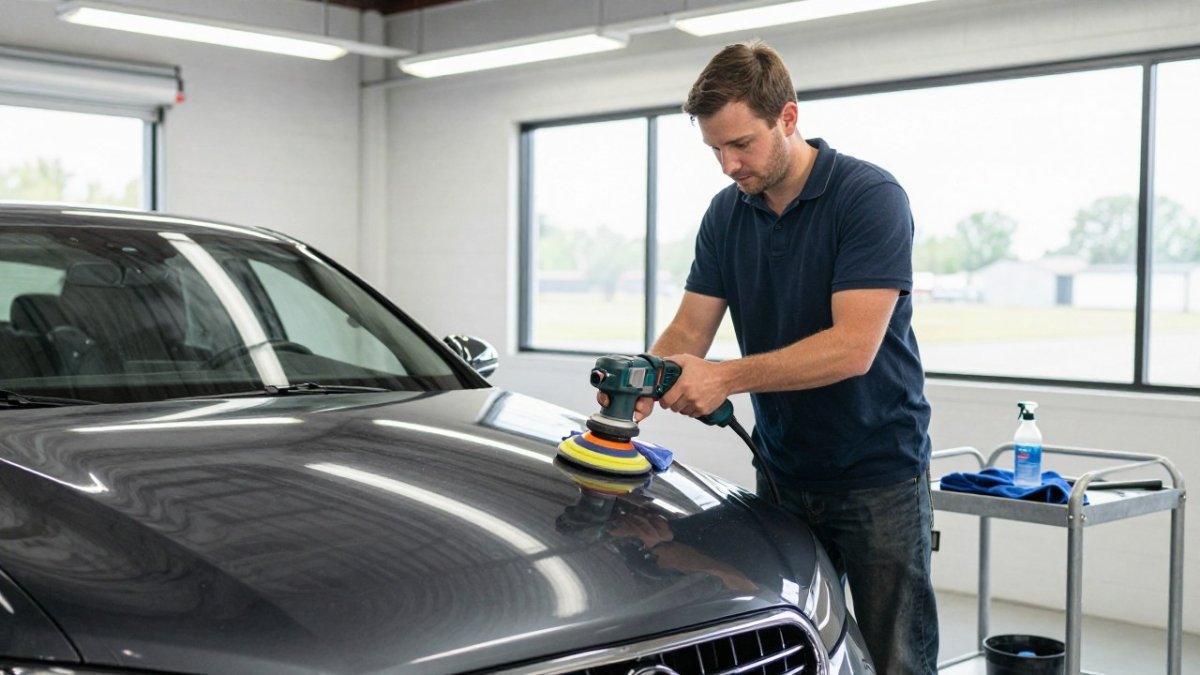
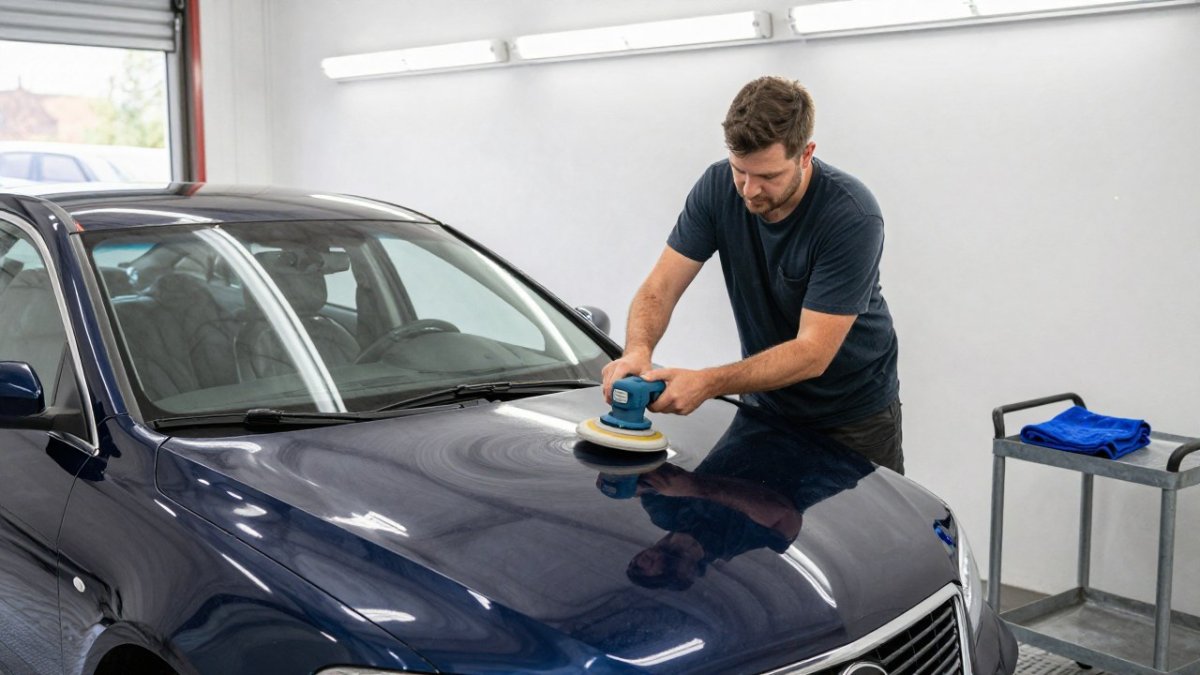
The bottle price is the smallest part of a first coating job. A realistic beginner budget includes microfiber towels, an applicator block and suede cloths, a pH-neutral wash soap, iron remover, a clay bar and lubricant, panel wipe, and, if the paint is swirled, polishing supplies.
Watch out: buying a concentrated kit before you own clay, iron remover, and panel wipe is the most common way beginners blow the budget and still get a streaky result.
Choosing a DIY Ceramic Coating Kit That Fits Your Skill Level
Match the kit to your comfort level rather than to the longest durability claim on the label. A beginner should pick a kit with a sprayable formula, a panel wipe, and clear instructions. If you have never polished paint, choose a kit that does not require paint correction first.
Ask yourself three questions before buying:
- Do I have a covered, ventilated space to work in?
- Am I comfortable wiping a panel down within minutes of applying?
- Do I want to maintain the coating myself with a maintenance wash?
Answer honestly. A modest kit applied well beats an aggressive kit applied badly.
Why an Easy-to-Apply Ceramic Coating Beats a Pro-Only Formula
An easy-to-apply ceramic coating beats a pro-only formula for most drivers because consistency matters more than chemistry. A coating applied evenly at home outperforms a high-solids product applied unevenly under pressure.
Pro-only formulas assume a controlled booth, trained hands, and infrared curing. Beginners rarely have any of that. Spray coatings trade some longevity for a much wider margin of error, and that trade is worth it on a daily driver.
If you would rather compare durability tiers and package options side by side, explore our ceramic coating packages to see what professional installation involves.
Ceramic Coating Preparation and Application: A Beginner's Walkthrough
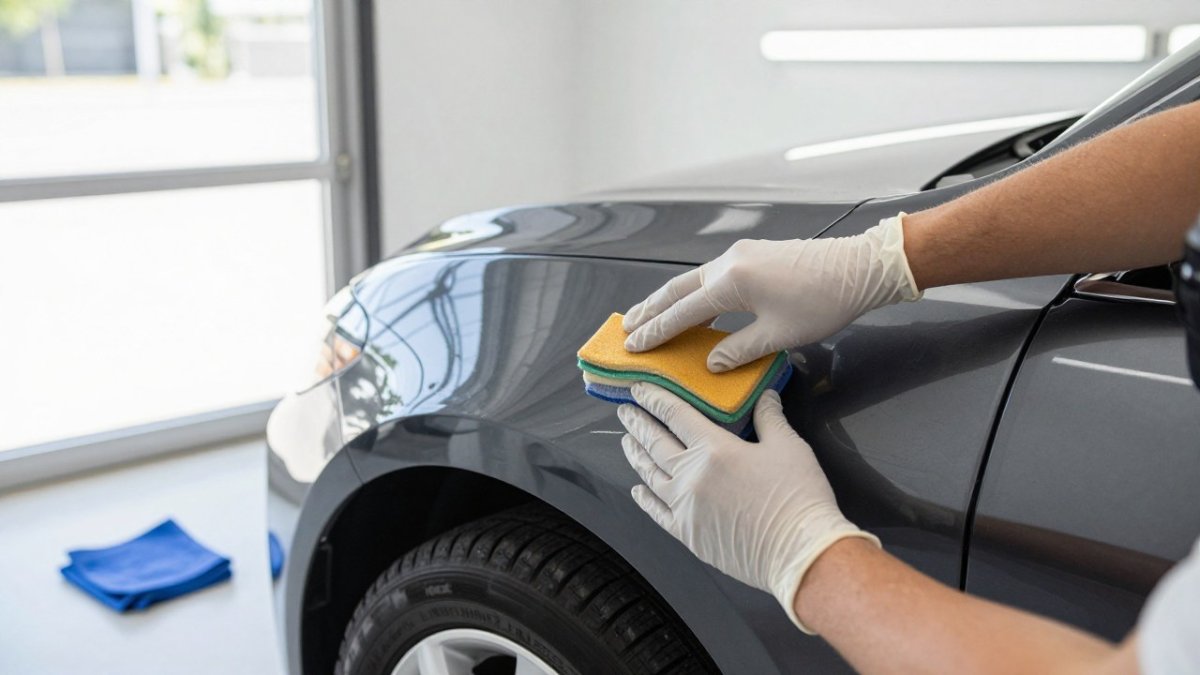
Preparation decides the outcome. Ceramic coating preparation and application is roughly 80% cleaning and decontamination and 20% actually applying the product. Skip the prep and the coating traps dirt under a hard layer.
Wash, Decontaminate, and Clay Bar
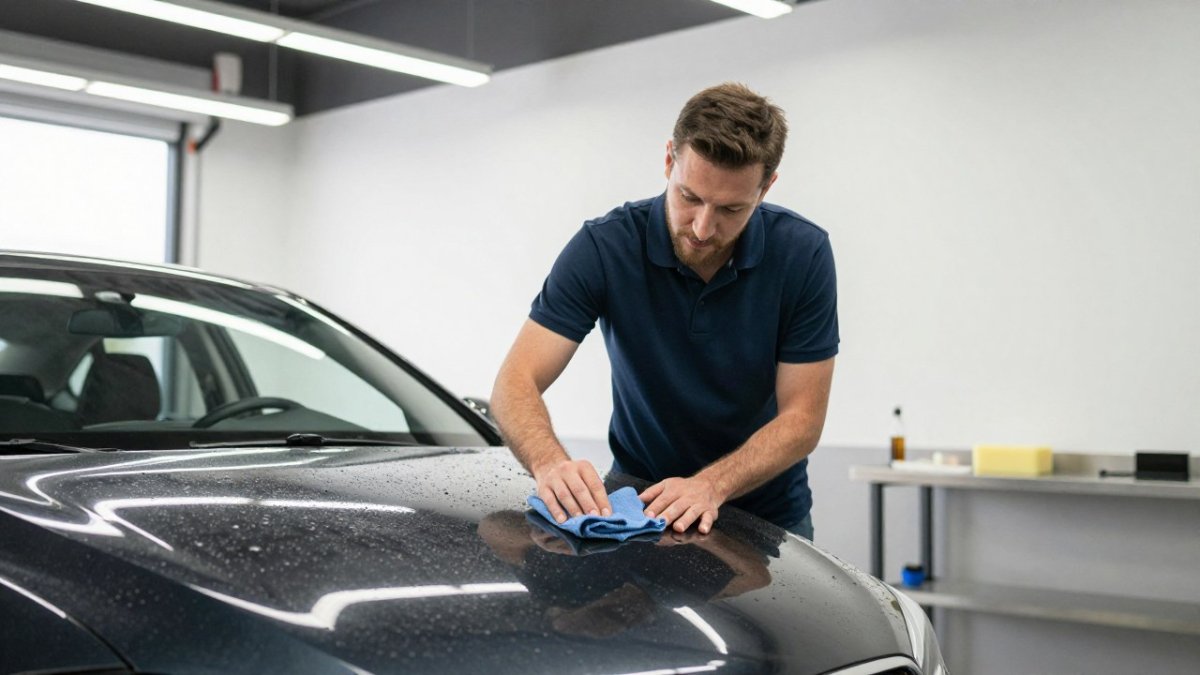
Start with a two-bucket wash using a pH-neutral soap. Rinse, then apply an iron remover to dissolve embedded metal particles. Follow with a clay bar, lubricated generously, moving in straight lines. The paint should feel glassy and smooth before you go further.
Panel Wipe and the Crosshatch Method
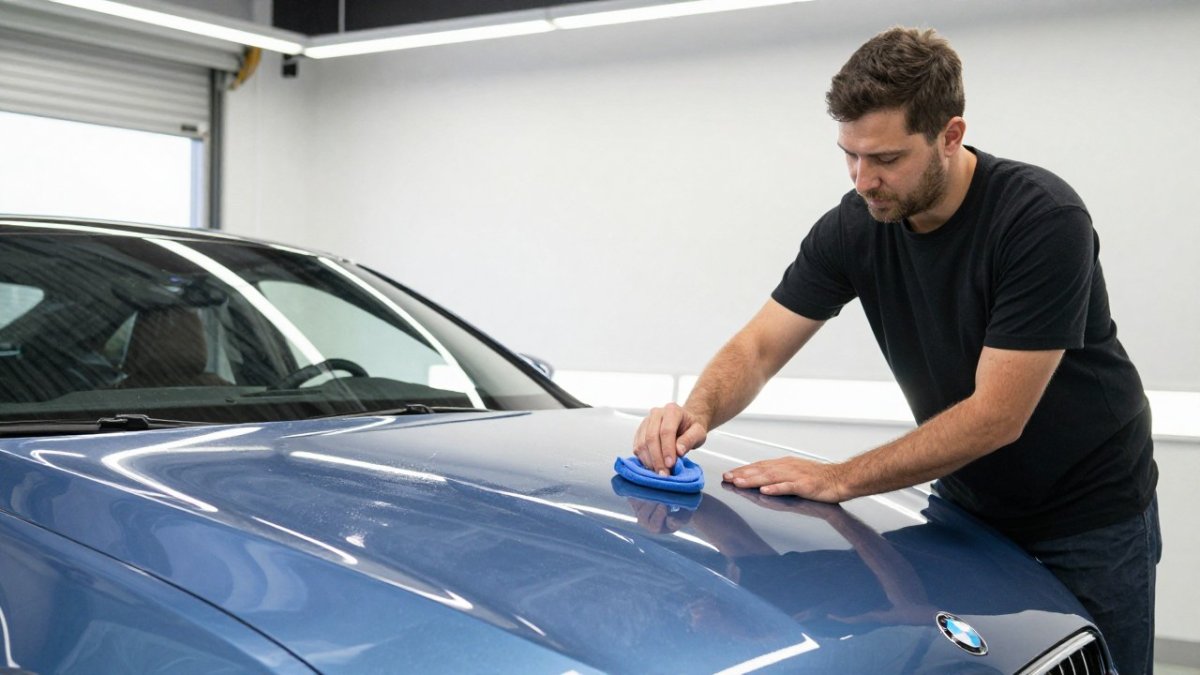
Spray panel wipe onto a microfiber towel and wipe the surface to strip oils and residue. Then apply the coating using the crosshatch method: pass left to right, then top to bottom, overlapping each stroke. This guarantees even coverage with no missed spots. Level with a clean towel, then buff to a uniform shine.
For a deeper primer on what full detailing involves, read our complete guide for first-time customers.
How Long Does DIY Ceramic Coating Last?
DIY ceramic coating durability varies with the product, prep quality, climate, and maintenance. How long does DIY ceramic coating last in practice? Shorter than the label promises if you park outside or skip maintenance washes. The useful question is not the number on the box but which variables push a coating toward the top or bottom of its range.
The Variables That Actually Drive Lifespan
Prep quality. A coating bonds to clean, bare clear coat. If iron, tar, or polishing oils remain under the layer, the bond fails early and the coating lifts or beads unevenly.
Washing habits. A pH-neutral maintenance wash every two to four weeks preserves the layer. Automatic brush washes and harsh alkaline soaps strip it faster than any climate factor.
Storage. Covered parking slows the breakdown of the hydrophobic layer. Outdoor parking under trees adds sap, bird droppings, and pollen that bond to the surface and require more frequent decontamination.
Maintenance toppers. A periodic spray topper refreshes beading and adds a sacrificial layer over the coating. It does not extend the base coating indefinitely, but it buys time between full reapplications.
Realistic Expectations by Use Case
Storage and driving conditions affect how long a coating lasts. Covered storage generally extends durability compared with outdoor parking. Judge your own situation honestly before you buy, and choose the tier that matches your storage and washing routine rather than the longest claim on the shelf.
Watch out: a coating that stops beading does not always mean the layer is gone. Contamination can mask a healthy coating, so decontaminate and reassess before you strip and reapply.
Common Application Mistakes and How to Fix Them
High spots, streaks, and hazing are the three mistakes we see most often, and all three trace back to timing. A high spot is excess product left to cure before leveling. Fix it by reapplying a small amount of coating to soften the area, then leveling immediately.
Streaking comes from applying in direct sun or on a hot panel. Move to shade and work smaller sections. Hazing usually means you waited too long to buff. Watch out: applying in humid, still air without ventilation can cause the product to flash unevenly, so open the bay door and keep air moving.
Book a Bay and Apply Your First Coating With Pro Tools
Applying your first coating goes better in a controlled space with the right lighting, ventilation, and tools on hand. The Bays O'Fallon offers self-service detailing bays where you can use professional-grade tools and products.
Our facility combines retail products, self-service bays, and full-service detailing under one roof, so you can buy a beginner-friendly coating, apply it yourself, or hand the keys to our team for expert installation and paint correction. Flexible monthly membership plans are available for self-service bay access.
Ready to stop guessing and start coating? Book a self-serve detailing bay and apply your first layer with pro tools on site. Prefer to browse first? Shop our detailing supplies for ceramic sprays, wash soaps, and microfiber towels. Questions about availability or membership? Contact our team for details.
The gap between a coating that lasts and one that fails is usually preparation and workspace, not the bottle.
Frequently Asked Questions
What is the downside to ceramic coating?
The main downsides are the prep work and the cost of mistakes. A ceramic coating locks in whatever is on the paint, so swirl marks, scratches, and contamination must be removed first with a wash, clay bar, and often polishing. If you skip prep, the coating seals in the flaws. High spots and streaks from uneven application are hard to remove once cured. Coatings also need a maintenance wash with pH-neutral shampoo to keep water beading, so they are not a set-and-forget product.
Can I apply ceramic coating myself as a beginner?
Yes. Consumer-grade spray coatings and beginner kits are designed for first-time application. Work in a shaded, dust-free space, prep the paint properly, and apply in small sections using the crosshatch method. Level the product with a microfiber towel before it flashes, and buff off high spots immediately. A DIY ceramic coating kit with an applicator, towels, and panel wipe removes most of the guesswork. If you are unsure about polishing, a self-service detailing bay with professional tools gives you a controlled space to practice.
How long does DIY ceramic coating last?
Durability depends on the formula and prep. Durability varies by formula, with spray coatings generally lasting less time than concentrated consumer coatings when properly cared for. Real-world lifespan drops with harsh washing, automatic car washes, and neglect. A pH-neutral maintenance wash every two to four weeks keeps the hydrophobic layer working. Store the car under cover where possible, and expect the coating to need a refresh sooner in high-sun or high-contamination conditions.
Do I need to polish my car before applying ceramic coating?
Polishing is not always required, but it is recommended if the paint has swirl marks, oxidation, or light scratches. A ceramic coating does not correct paint; it protects what is underneath. On a new or flawless finish, a wash, clay bar, and panel wipe may be enough. On older paint, a light polish removes defects and gives the coating a clean surface to bond to. Test a small panel first, and use a polishing pad and compound matched to your paint's condition.