 Comparison
How to Decide if Professional Ceramic Coating Is Worth It
Last Updated: October 28, 2026
Quick Summary
A professional ceramic coating is worth it if you plan to keep your car past the coating's rated life and will maintain it with pH-neutral washes. Compare the quote against what you would spend on wax or sealant over the same period. If you will sell in a year or two, the math rarely favors the premium tier.
- Entry-level coatings last roughly 1 to 2 years and suit newer cars with clean paint.
- Mid-tier coatings last roughly 3 to 5 years and usually include a one-step machine polish.
- The first 24 to 48 hours after application determine how well the film bonds.
- Dish soap, degreasers, and automatic brush washes shorten coating life.
- A coating seals in existing defects, so paint correction must happen first.
Table of Contents
- What Professional Ceramic Coating Actually Does to Your Paint
- The Real Professional Ceramic Coating Cost Breakdown
- Professional vs. DIY Ceramic Coating: Which One Fits You
- How Long Does Ceramic Coating Last in Practice
- Ceramic Coating Maintenance: What Ownership Really Requires
- When Ceramic Coating Fails, and What It Cannot Protect Against
- How to Decide if a Ceramic Coating Is Worth It for Your Car
- Frequently Asked Questions
What Professional Ceramic Coating Actually Does to Your Paint
Professional ceramic coating is a chemical polymer solution applied to a vehicle’s exterior, forming a protective layer over the paint. It creates a hydrophobic surface that repels water, dirt, and contaminants, and offers UV protection and gloss.
At The Bays O'Fallon, we explain it this way: a coating changes how your paint behaves, not how it looks on day one. Water beads and sheets off faster. Contaminants sit on top instead of etching in. Bird droppings and acid rain do less damage because they have less direct contact with the clear coat. The SiO2 chemistry overview from the American Chemical Society helps explain why silica-based films bond so tightly to painted surfaces.
Surface Preparation: Where the Real Work Happens
A common mistake is booking a coating without asking what correction is included. If the answer is vague, the price is hiding skipped work.
The Real Professional Ceramic Coating Cost Breakdown
| Cost Component | What It Covers | Why It Varies |
|---|---|---|
| Decontamination wash | Clay bar, iron removal, prep spray | Paint condition |
| Paint correction | Machine polishing, swirl removal | Severity of defects |
| Coating product | SiO2 coating tier and durability | Product grade |
| Labor | Application, leveling, curing time | Vehicle size, complexity |
| Maintenance guidance | Wash method, product recommendations | Package level |
What the Tiers Actually Cost
- Entry-level coating (roughly 1 to 2 years of rated durability): typically the lowest labor load, often a single-stage polish or no correction, and the shortest warranty. This is the tier that fits a newer car with clean paint.
- Mid-tier coating (roughly 3 to 5 years): usually includes at least a one-step machine polish, a longer warranty, and a maintenance schedule. This is the most common package sold to owners keeping a car four or more years.
- Premium or multi-layer coating (5+ years): includes multi-stage paint correction, sometimes a second coating layer, and the longest warranty terms. This is where heavy-defect paint gets expensive, because correction time dominates the invoice.
The Hidden Line Items
- Curing and drop-off time: many installers keep the car overnight or longer so the film can cure without moisture. That is built into labor, not billed separately, but it affects scheduling.
- Maintenance products: pH-neutral wash soap, microfiber towels, and a coating-safe drying aid. These are consumables you will rebuy.
- Annual inspection or top-up: some warranties require a yearly inspection or maintenance wash to stay valid. Skipping it can void coverage.
- Paint protection film (PPF) add-ons: if you want impact protection on high-risk panels like the hood and bumper, that is a separate product and a separate line item.
Check The Bays O'Fallon's website for current pricing.
The Break-Even Math
The worth-it question is really a break-even question. Compare the coating quote against what you would spend on wax or sealant over the same period: repeated applications, your time, and the resale hit from neglected paint. If you plan to keep the car past the coating's rated life and you will maintain it, the per-year cost of a professional coating often lands close to repeated sealant applications, with less labor on your end. If you will sell in a year or two, the math rarely favors the premium tier.
Professional vs. DIY Ceramic Coating: Which One Fits You
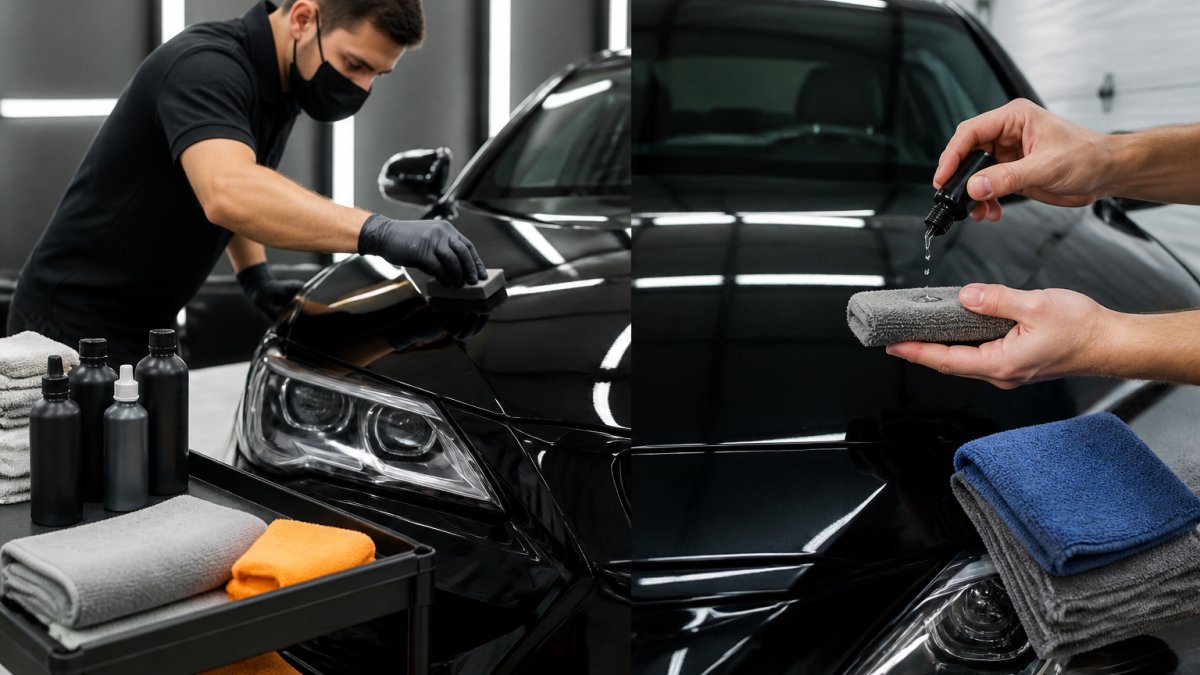
If you want to handle detailing yourself, The Bays O'Fallon offers self-service bays with access to professional-grade tools and products.
Best for: owners with clean paint who want to learn the process. Skip if: your paint has heavy defects that need machine correction first.
How Long Does Ceramic Coating Last in Practice
Durability is shaped by sun exposure, how often the car is washed, what soap is used, and whether the coating is topped up. Curing time matters too: the first 24 to 48 hours after application determine how well the film bonds, which is why installers ask you to keep the car dry.
Rated Life vs. Real Life
The tell is behavioral, not cosmetic: water stops beading tightly and starts sheeting flat, dirt clings faster after a wash, and the paint loses that slick feel. That is your signal that the top layer is spent, even if the coating is still physically present.
What Actually Shortens Coating Life
- Improper prep at install: coating over swirls, oxidation, or bonded contaminants traps defects and gives the film a weak base. This is the most common cause of early failure.
- Harsh chemicals: dish soap, degreasers, and acidic wheel cleaners strip the coating's top layer.
- Automatic brush washes: the brushes reintroduce swirl marks and abrade the coating.
- Bird droppings and bug splatter left on: acids etch through the coating if not removed promptly.
- Application in a dirty or humid space: dust and moisture get locked under the film.
- Skipped curing time: driving in rain or washing too soon after application prevents a full bond.
What Extends It
- pH-neutral maintenance washes every few weeks.
- Periodic decontamination to clear embedded fallout that masks the hydrophobic layer.
- A coating topper or spray sealant applied on schedule to refresh the top layer.
-
- Keeping the car out of direct sun when possible and avoiding long stretches of unwashed road film.
Failure Scenarios to Watch For
When a coating fails prematurely, the cause is usually predictable: poor surface preparation, application in a dirty or humid space, skipped curing time, or aggressive washing afterward. If you see patchy beading, dull spots, or water that no longer sheets, the coating is telling you it needs decontamination or a top-up, not necessarily a full reinstall. Diagnosing the failure mode before paying for a new coating saves money and prevents repeating the same mistake.
Ceramic Coating Maintenance: What Ownership Really Requires
The Bays O'Fallon offers retail products and professional-grade detailing products.
When Ceramic Coating Fails, and What It Cannot Protect Against
A coating also will not fix oxidation or existing defects; it seals in whatever is there. If your paint needs correction, that has to happen first. For a deeper look at coating limits and paint correction, the consumer guidance on vehicle surface protection from the FTC is a useful starting point on what claims to question. Our blog and FAQs cover more on ceramic protection limits and paint correction.
How to Decide if a Ceramic Coating Is Worth It for Your Car
- Is the paint free of heavy swirl marks or oxidation?
- Will you keep the car at least two to three years?
- Can you commit to pH-neutral maintenance washes?
- Do you park outside or in direct sun?
- Does the quote include paint correction, not just coating?
Ready to talk it through? Contact The Bays O'Fallon.
Frequently Asked Questions
Is professional ceramic coating better than DIY?
The Bays O'Fallon offers professional ceramic coating installation as well as self-service detailing bays with access to professional-grade tools and products. Check the website for current service details.
How much does professional ceramic coating cost?
The Bays O'Fallon lists current service pricing on its website.
Does ceramic coating protect against scratches?
It resists light marring and makes washing safer by adding a slick, hydrophobic layer, but it does not stop rock chips or deep scratches. A coating is measured in microns and sits on top of the clear coat. Keys, shopping carts, and gravel will still get through. If impact protection is your goal, paint protection film (PPF) is the product built for that, and many owners stack PPF under a coating. Be skeptical of any claim that a coating makes paint scratch-proof.
Can you wax a ceramic coated car?
You can, but there is little point. Wax sits on top of the coating and can mask its hydrophobic behavior and gloss. Worse, many waxes and cleaner waxes contain abrasives or solvents that degrade the coating layer. If you want extra slickness between services, use a coating-specific topper or a silica spray sealant instead. For routine care, a pH-neutral soap and a maintenance wash are all a coated car needs to keep beading and sheeting properly.
The gap between a coating that lasts and one that fails usually comes down to preparation and maintenance, not the product label. The Bays O'Fallon brings professional ceramic coating installation, self-serve bays, and pro-grade supplies under one roof, so you can choose expert installation or handle it yourself with the right tools. Get started with The Bays O'Fallon and protect your paint with a process built to last.