 Comparison
Why Professional Paint Correction Beats DIY Every Time
Last Updated: November 7, 2026
Quick Summary
Professional paint correction is the controlled removal of a thin clear-coat layer to level defects and restore gloss, done with paint thickness measurement and test spots that manage the risk of burning through. DIY correction is viable for some owners, but the learning curve is paid in your own paint, and once clear coat is gone only a repaint fixes it.
- Correction removes swirl marks, light marring, oxidation, water spot etching and fine scratches, but not scratches through the clear coat.
- A dual-action polisher is forgiving, while a rotary polisher cuts harder and generates heat in the wrong hands.
- Skipping the test spot is the most common cause of burned edges and strike-through on a DIY job.
- A paint thickness gauge is the piece of equipment most DIYers skip, yet it shows whether a panel has enough clear coat to correct.
- Ceramic coating is protective and adds a layer, so coating over uncorrected paint locks in the swirl marks.
Table of Contents
- What Professional Paint Correction Actually Fixes
- Professional vs DIY Paint Correction: A Transparent Comparison
- Clear-Coat Removal and How Professionals Manage the Risk
- What Paint Correction Costs and What Drives the Price
- How Long Does Paint Correction Take?
- Paint Correction vs Ceramic Coating: What Each One Does
- How to Evaluate a Detailer and Verify the Work
- Book Your Bay at The Bays O'Fallon
- Frequently Asked Questions
What Professional Paint Correction Actually Fixes
Paint correction is the controlled removal of a thin layer of clear coat to level out surface defects and restore gloss. It is not a wash, a wax, or a quick buff.
A car that looks dull in sunlight but "fine" under garage lighting is a common pattern. That difference is where the damage lives.
Modern factory paint is a layered system. Beneath the color coat sits a clear coat, a transparent protective layer that carries the shine.
Swirl Marks, Oxidation, and the Defects That Age Your Paint
Swirl marks are fine circular scratches caused by washing with dirty mitts, dry wiping, or automatic brushes. They scatter light and read as a dull haze in direct sun.
Oxidation is the chemical breakdown of the clear coat from sun exposure and airborne contaminants. It starts as a chalky film and, left alone, can reach the color layer.
Other common defects include water spots etched by minerals, fine scratches from road grit, deeper scratches that catch a fingernail, and paint marring from improper contact. The nonprofit car care guidance from the Specialty Equipment Market Association is a useful starting point for understanding how surface contamination accelerates this wear.
What Correction Can and Cannot Remove
Correction removes defects that sit within the clear coat. It cannot fix what has gone through it.
- Removable: swirl marks, light marring, oxidation, water spot etching, fine scratches
- Not removable: scratches through the clear coat, chips, peeling, fading into the base coat, rust
- Sometimes improvable: deeper scratches can be softened and made less visible, but not erased
That last category is where expectations go wrong. A detailer who promises to remove every scratch is either guessing or overselling.
Professional vs DIY Paint Correction: A Transparent Comparison
The honest answer is that DIY correction is genuinely viable for some owners and genuinely risky for others. The dividing line is not confidence.
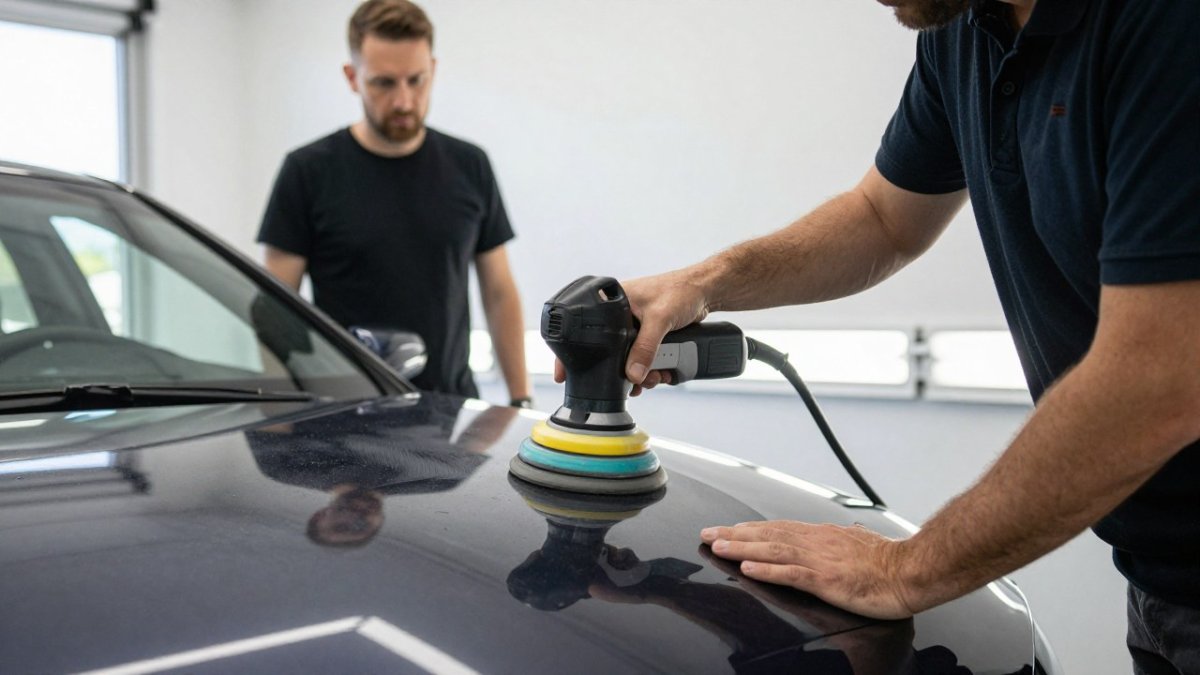
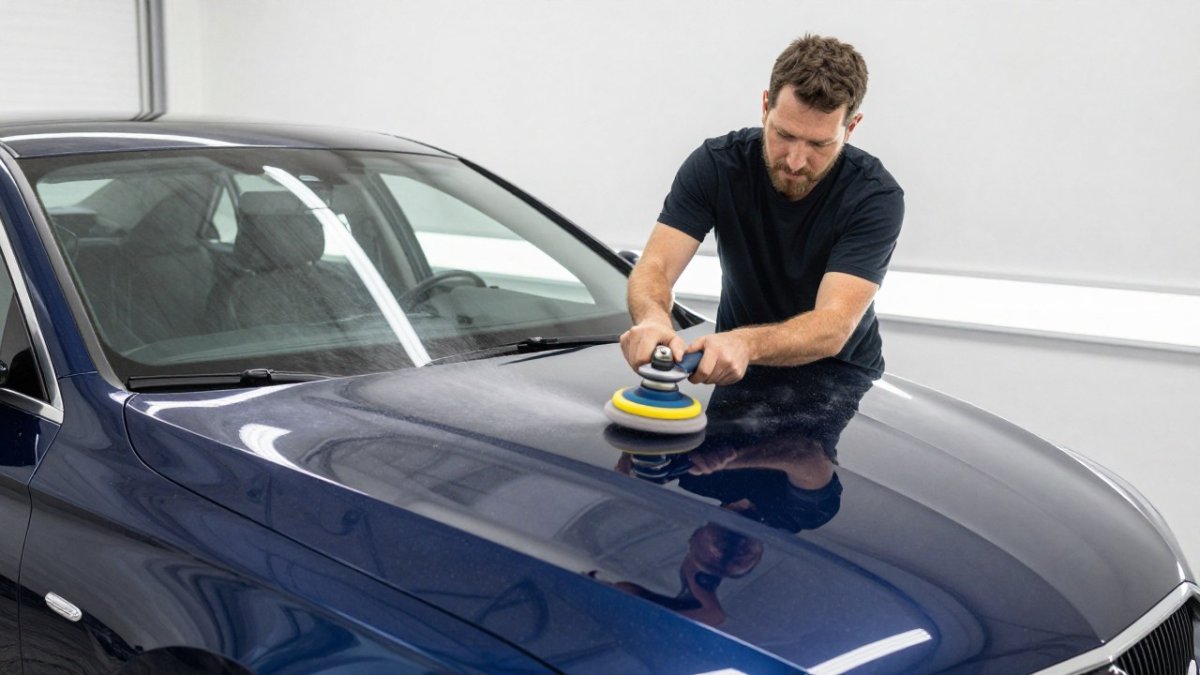
A dual-action polisher is forgiving. Its orbit makes it hard to burn paint. A rotary polisher is faster and cuts harder, and it will generate heat in the wrong hands.
| Factor | Professional Correction | DIY Correction |
|---|---|---|
| Equipment cost | Included in service | Polisher, pads, compounds upfront |
| Risk of clear-coat damage | Managed with measurement | High for beginners |
| Time investment | Dropped off, collected | A full weekend or more |
| Consistency across panels | Even by training | Varies panel to panel |
| Best for | Daily drivers, leased cars, resale prep | Enthusiasts with a spare car and patience |
What most guides miss is that the equipment is the cheap part. Pads, compounds, and a polisher are a one-time outlay. The expensive part is the learning curve, and it is paid in your own paint.
Which Defects a Beginner Can Realistically Address
Not every defect is a fair first project. A useful way to think about it is by how much clear coat the fix requires you to remove and how forgiving the panel is if you go too far.
- Realistic for a careful beginner: light swirl marks, wash marring, and faint towel scratches on a flat panel like a hood or door. These respond to a dual-action polisher with a medium pad and a fine finishing polish, and the risk of strike-through is low when you keep the machine moving and work in good light.
- Ambitious but doable with practice: light oxidation and water-spot etching on horizontal surfaces. These need a slightly more aggressive pad and compound, plus a test spot to confirm the clear coat can take it.
- Not a beginner job: deep scratches that catch a fingernail, defects near panel edges and body lines, thin or previously polished panels, and anything on a car with unknown paint history. Edges and raised body lines hold less clear coat and heat faster, which is exactly where a first-timer burns through.
A common pattern is that beginners get acceptable results on the first panel and then damage the third or fourth as confidence outpaces technique.
The Equipment and Consumables That Actually Matter
A dual-action polisher with a 5-inch or 6-inch backing plate, a set of foam pads in at least two cut levels, a fine finishing polish, a compound for heavier defects, microfiber towels, and a dedicated panel-prep wipe are the core kit. Pad choice and technique matter a great deal in paint correction. A paint thickness gauge is the one piece of equipment most DIYers skip, and it is also the one that tells you whether the panel has enough clear coat to correct at all.
You can explore car detailing services if you would rather hand the risk to someone who measures before cutting.
Clear-Coat Removal and How Professionals Manage the Risk
Every polishing pass removes a small amount of clear coat. There is no way to polish without removing material. That is the mechanics of it.
A paint thickness gauge can tell a detailer how much clear coat exists before work starts and how much remains afterward. On a car with a healthy film, there is room to work.
Risk management looks like this:
- Measure paint thickness across multiple points on each panel
- Identify panels with less clear coat and treat them conservatively
- Run a test spot before committing to a full panel
- Choose the least aggressive combination that achieves the goal
- Re-measure and stop when the target is met
Watch out: skipping the test spot is the single most common cause of burned edges and strike-through on a DIY job. Once clear coat is gone, only a repaint fixes it.
What Paint Correction Costs and What Drives the Price
Pricing depends on vehicle size, paint condition, and how many stages the job requires. There is no honest flat rate, because a well-kept two-year-old car and a neglected ten-year-old car are different jobs. Because newer finishes can need a lighter touch than neglected paint, correcting car paint starts with assessing the surface before choosing the right approach.
The main drivers:
- Number of stages: a one-step correction refines and adds gloss; a multi-stage correction cuts harder, then refines
- Paint condition: heavier defect load means more passes and more labor time
- Vehicle size: trucks and three-row SUVs take longer than a coupe
- Panel complexity: tight curves and edges slow the work down
- Add-ons: coating, interior work, or paint sealant applied after correction
Labor time is the biggest line item. Correction is hours of focused, physical work, and that is what you are paying for.
What the Numbers Typically Look Like
Across the market, a one-step enhancement on a well-kept car commonly lands in the low hundreds of dollars, a two-stage correction on a daily driver with moderate swirling generally runs into the several-hundred range, and a multi-stage correction on a neglected or larger vehicle can reach four figures before any coating is added. These are ranges, not quotes, because two shops can look at the same car and see different amounts of work. What matters is that the estimate is tied to a measured condition, not a menu price.
A quote can be broken down into these components:
- Decontamination and wash: iron removal, tar removal, and a clay treatment before any polishing, since polishing over bonded contaminants grinds them into the paint
- Paint thickness measurement and test spot: the step that determines how aggressive the correction can safely be
- Correction labor by stage: the largest line, priced by hours and passes
- Consumables: pads, compounds, and towels, sometimes bundled and sometimes itemized
- Protection: sealant, wax, or coating applied after correction, priced separately because durability and prep differ
Why the Same Car Gets Different Quotes
Asking how an estimate was derived, and whether a test spot was performed before quoting, can help you compare options.
For current package options, check full-service detailing in O'Fallon and compare what each tier includes before booking.
How Long Does Paint Correction Take?
Paint correction time depends on condition and the number of stages required. Ask for a realistic timeline when you request a quote.
Breakdown by scope:
Paint Correction vs Ceramic Coating: What Each One Does
These two services are constantly confused, and the confusion costs people money. Paint correction is abrasive: it removes defects. Ceramic coating is protective: it adds a semi-permanent layer on top of the paint.
Correction fixes the past. Coating protects the future. They solve different problems, which is why they are usually paired.
Coating over uncorrected paint locks in the swirl marks. That is the mistake. If your goal is gloss and clarity, correction comes first.
You can review ceramic coatings to see durability options and what each package includes.
How to Evaluate a Detailer and Verify the Work
Ask for documentation when comparing detailers.
Use this checklist when vetting a shop:
- Do they measure paint thickness before quoting?
- Will they show before-and-after photos taken under consistent lighting?
- Do they run a test spot and show you the result before full correction?
- Can they explain the difference between one-step and multi-stage?
- Do they set realistic expectations about scratches that will not fully remove?
- Is the work area indoors and well lit?
- Are they clear about what aftercare the finish needs?
Watch out: before-and-after photos shot under different lighting prove nothing. Ask for the same angle, same light, same panel. The Federal Trade Commission's guidance on advertising claims applies here too, since overstated results are a consumer protection issue, not just a bad experience.
For answers to common questions about finishes and maintenance, the blog and FAQs cover the practical side.
Book Your Bay at The Bays O'Fallon
Correction is a measured process, and the outcome depends on who is holding the polisher.
The Bays O'Fallon offers professional paint correction and ceramic coating installations, and self-service bays with professional-grade tools for owners who want to do the work themselves. Monthly membership plans are available for self-service bay access.
Get started with The Bays O'Fallon and protect the finish you already paid for. Contact The Bays O'Fallon for inquiries and appointments.
Ready to stop guessing about your clear coat? Reach out and we will tell you what your paint actually needs.
Frequently Asked Questions
Is professional paint correction worth it?
It depends on your goals. Professional paint correction restores gloss, removes swirl marks and oxidation, and protects resale value, but it costs more than doing it yourself. If your car has noticeable defects or you plan to keep it long-term, the results and reduced risk often justify the price. For minor imperfections on a daily driver, a one-step correction may be enough. Compare quotes and ask for before-and-after photos before deciding.
What is the average cost of a paint correction?
Paint correction cost varies widely based on vehicle size, paint condition, and the number of stages. A one-step correction typically costs less than a multi-stage correction, which involves more labor and time. Ceramic coating or long-term protection adds to the total. Request a detailed quote that breaks down labor, products, and any coating services so you can compare accurately.
How long does paint correction take?
Correction time depends on paint condition, vehicle size, and whether you choose professional or DIY work. Ask your detailer for a realistic timeline before booking.
Should you get paint correction before ceramic coating?
Yes. Ceramic coating locks in the surface, so any swirl marks or scratches left behind will be sealed under the coating. Paint correction removes those defects first, giving the coating a clean, glossy base. Skipping correction means the coating protects a flawed finish. For best results, have a professional correct the paint and then apply the coating in a controlled environment.