 How-to
How Do You Maintain a Ceramic Coating Finish?
Last Updated: November 4, 2026
Quick Summary
Wash a ceramic coating every two weeks for normal driving, and weekly if you park outside or face road salt and grime. Use gentle, pH-neutral shampoo with the two-bucket method, dry immediately, and avoid brush car washes and wax products.
- A maintenance wash takes about 30 to 45 minutes and touches the paint as little as possible.
- Use the two-bucket method or a fresh wash mitt per section to stop contamination spreading.
- Apply a ceramic coating maintenance spray every few weeks after drying to boost water beading.
- Rinse the lower third of the car and wheel arches weekly during salt season.
- Reduced beading usually means contamination, so try iron remover and clay before assuming failure.
Table of Contents
- How Often to Wash a Ceramic Coated Car
- What to Avoid After Ceramic Coating
- Step-by-Step: A Maintenance Wash That Protects the Coating
- How to Remove Water Spots From Ceramic Coating
- Using a Ceramic Coating Maintenance Spray and Topper
- Seasonal and Climate-Specific Coating Maintenance
- Troubleshooting Reduced Beading and Choosing the Right Products
- Book a Bay and Keep Your Coating Performing
- Frequently Asked Questions
How Often to Wash a Ceramic Coated Car
Wash a ceramic coated car every two weeks for normal driving, and weekly if you park outside or drive through road salt and grime. That schedule keeps the coating clean enough to bead water and shed dirt on its own. Learning how to maintain ceramic coating finish starts with one habit: regular, gentle washing. Skip it and even a quality coating starts to look dull.
Coated vehicles often come back with clogged surfaces when owners wait months between washes. The coating itself is rarely the problem. The maintenance is.
How often you wash depends on how you use the car:
- Daily commuter, garage kept: every two weeks
- Parked outside under trees: weekly, because sap and bird droppings etch fast
- Winter driving with road salt: weekly, and rinse the lower panels sooner
- Weekend car, stored indoors: monthly is often enough
- Coastal or dusty areas: weekly, since salt and grit settle quickly
The International Detailing Association's guidance on vehicle care backs the same idea: frequent, gentle washing beats occasional aggressive cleaning.
The article ties wash frequency to how and where the car is used.
| Driving and parking situation | Wash frequency |
|---|---|
| Daily commuter, garage kept | Every two weeks |
| Parked outside under trees | Weekly, because sap and bird droppings etch fast |
| Winter driving with road salt | Weekly, and rinse lower panels sooner |
| Weekend car, stored indoors | Monthly is often enough |
| Coastal or dusty areas | Weekly, since salt and grit settle quickly |
What to Avoid After Ceramic Coating
Avoid automated car washes with spinning brushes, harsh alkaline soaps, and wax-heavy products for the life of the coating. These strip or clog the protective layer. Fresh coatings also need a short cure window before their first wash.
Here's what to keep away from a coated vehicle:
- Brush car washes: the bristles grind grit into the paint and leave micro-scratches
- Wax and gloss additives: they sit on top of the coating and block its water beading
- Strong degreasers and acid cleaners: they wear down the coating over time
- Washing in direct sun: soap dries too fast and leaves streaks
- Scrubbing bird droppings or bug splatter: soften them first, then wipe gently
A common mistake is treating a coated car like an uncoated one. The coating is a sacrificial layer, not armor. Abrasion still wins if you let it.
Step-by-Step: A Maintenance Wash That Protects the Coating
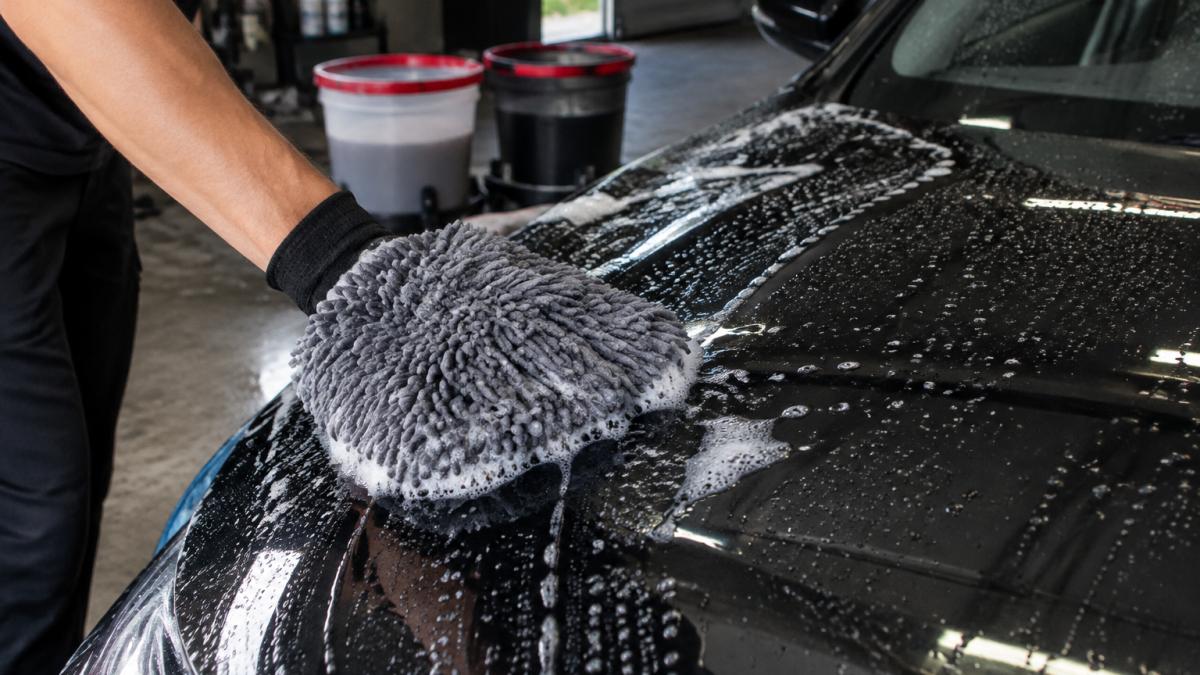
A maintenance wash takes about 30 to 45 minutes and follows one rule: touch the paint as little as possible. Pre-rinse, foam, contact wash, then dry. Each step removes a layer of dirt before your mitt ever lands on the surface.
Pre-Rinse and Foam Before You Touch the Paint
Blast off loose dirt with a pressure washer first, working top to bottom. Then coat the car in foam wash and let it dwell for a few minutes. This lifts road grime and grit so your wash mitt has less to drag across the paint.
Two-Bucket Contact Wash With Clean Mitts
Use the two-bucket wash method: one bucket of clean pH-neutral shampoo, one bucket of rinse water. Dip, wash a panel, rinse the mitt, repeat. Better yet, use the multiple wash mitt method, a fresh mitt per section. It keeps contamination from spreading across the paint surface.
Safe Drying to Prevent Water Spots
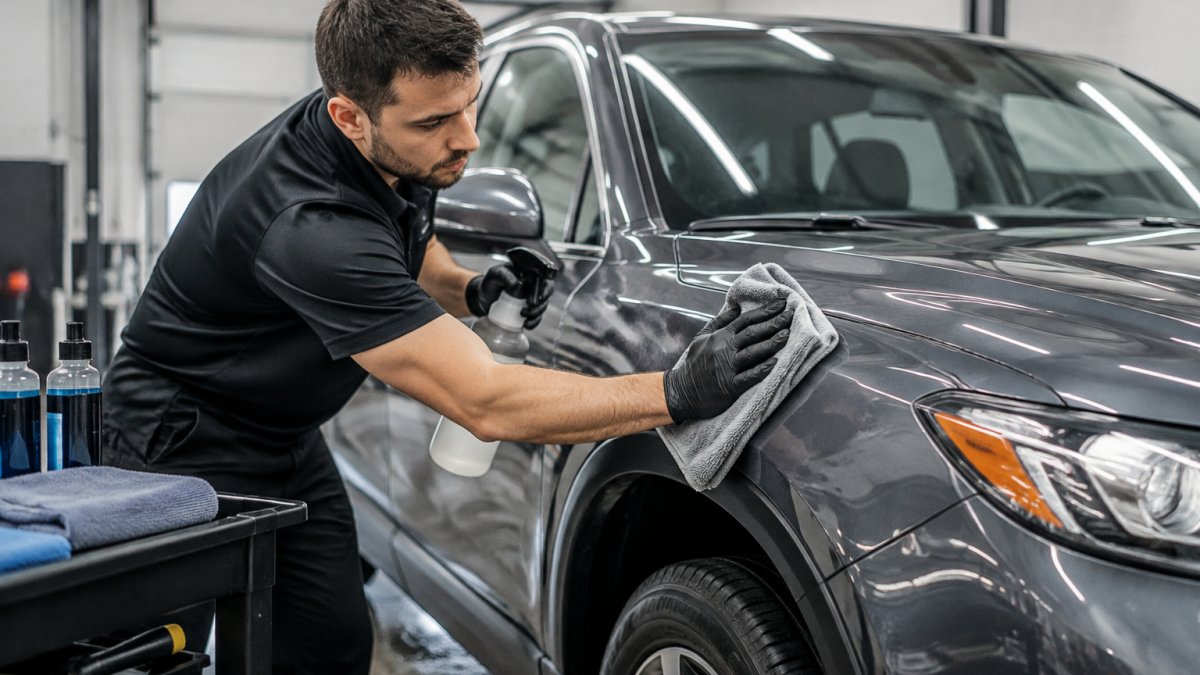
Dry immediately after rinsing. Use a clean microfiber towel and pat or drag with no pressure, or use forced air drying to push water off. Hard water left to dry in the sun leaves mineral spots that bond to the coating. Safe drying is the step most people rush, and it's the one that causes the most spots.
If you'd rather do this wash with professional-grade tools on site, you can book a self-serve detailing bay and bring your own routine to a shaded space.
How to Remove Water Spots From Ceramic Coating
Water spots on a ceramic coating fall into two categories, and the fix depends on which one you have. Type I spots are surface mineral deposits, calcium and magnesium left behind when hard water evaporates. They sit on top of the coating and usually wipe away after a wash. Type II spots have etched into the coating or the clear coat beneath it, often after rain or sprinkler water baked on in direct sun. Those need a different approach, and aggressive scrubbing makes them worse.
Start by identifying what you're dealing with. Wash the panel with pH-neutral shampoo, rinse, and dry. If the spot disappears, it was surface residue. If a faint ring or crater remains, it has started to etch.
For Type I spots:
- Apply a dedicated water spot remover to a cool panel in the shade. Most are mildly acidic and dissolve the mineral ring without abrasion.
- Let it dwell per the label, usually 30 to 60 seconds, then wipe with a clean microfiber towel and rinse thoroughly.
- Reapply a maintenance spray to the treated area, since spot removers can strip toppers.
For Type II spots:
- A mild acid-based spot cleaner can lift light etching if the coating is intact. Test a small area first.
- If the ring persists, a light hand polish with a finishing polish and a soft foam pad may level the etched layer. Keep pressure low and work in shade.
- Skip abrasive pads, rubbing compounds, and anything labeled "heavy cut." They remove coating, not just the spot.
Watch out: scrubbing a hard water spot with a dry towel grinds the minerals into the coating and leaves fine scratches that require polishing to fix, always lubricate the surface first.
Prevention matters more than removal. Dry the car immediately after washing, and use forced air or a plush microfiber towel to chase water out of panel gaps, mirrors, and trim where it pools.
When to stop DIY: if spots return within days of a proper wash and spot treatment, or if the rings feel rough to the touch after claying, the coating may be compromised or the etching may have reached the clear coat. Our ceramic coating service can help you assess the finish and discuss your options.
Using a Ceramic Coating Maintenance Spray and Topper
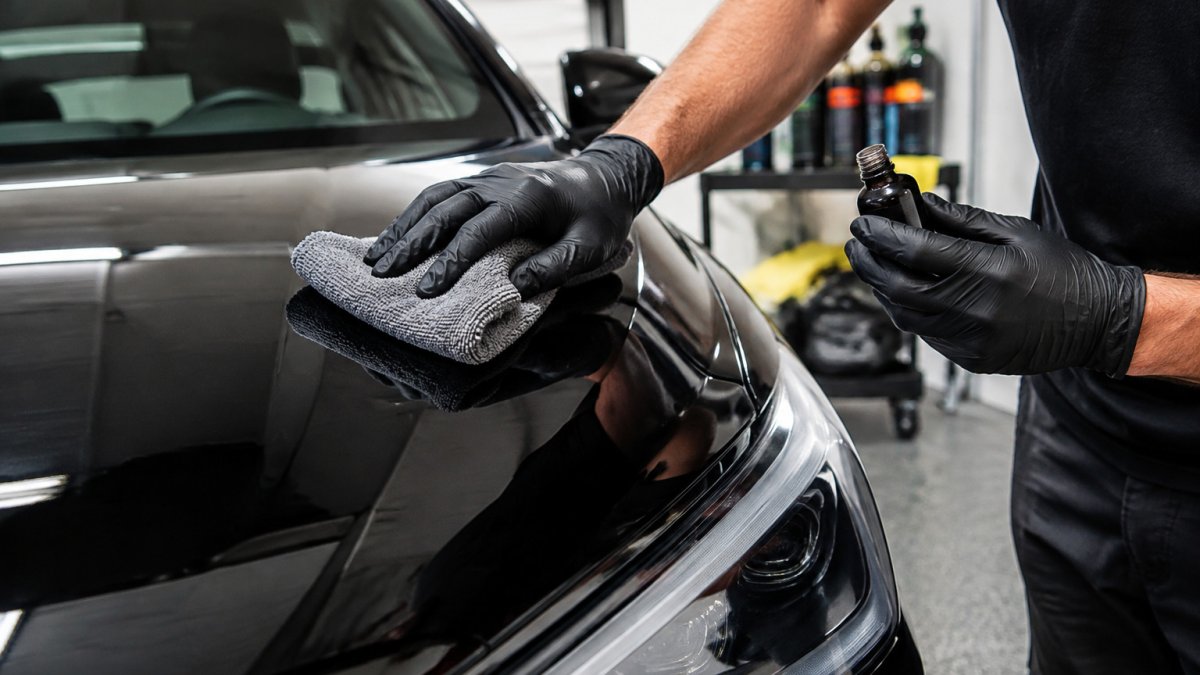
A ceramic coating maintenance spray adds a thin layer of protection between washes and boosts water beading. Use it every few weeks after drying, misting a light coat and buffing with a clean microfiber towel. A coating topper applied once or twice a season does the same job with longer durability.
These products are not replacements for the base coating. They're upkeep. A good maintenance spray also helps repel dust and makes the next wash easier.
Pick products labeled coating-safe. Avoid anything with wax or heavy gloss enhancers, since those fight the coating instead of feeding it.
Seasonal and Climate-Specific Coating Maintenance
Most guides give one universal wash schedule. Coating care actually changes with the weather, the water, and what's landing on the paint.
Winter and road salt. Salt and brine cling to lower panels, wheel wells, and the rear hatch, and they stay there until you rinse them off.
Hard water. If your tap water leaves spots on glass or shower doors, it will leave them on your coating.
High heat and sun. Wash in the shade or during cooler morning and evening hours. Soap and rinse water flash-dry on hot panels and leave streaks and mineral rings.
Pollen and tree sap. Spring pollen is fine and abrasive, and sap etches quickly once the sun hits it.
Coastal salt air. Salt spray settles on every upward-facing surface and accelerates contamination.
Dusty and agricultural areas. Fine dust is abrasive, so pre-rinse thoroughly and avoid dry wiping. A foam pre-soak does more work here than on a lightly soiled car.
If you want a routine you can keep up year-round, our self-serve memberships give you monthly access to the bays.
Troubleshooting Reduced Beading and Choosing the Right Products
Reduced water beading usually means surface contamination, not a failed coating. Road film, minerals, and soap residue clog the top layer and stop water from sheeting. A chemical decontamination with an iron remover, followed by a clay bar on the rough spots, often brings the beading back.
Work through this order before you assume the coating is gone:
- Wash with pH-neutral shampoo and dry fully
- Apply an iron remover to lift embedded metal particles
- Use a tar remover on the lower panels
- Clay bar any area that still feels rough
- Reapply a maintenance spray and check beading again
If beading stays flat after all five steps, the coating may be near the end of its lifespan. That's a job for a pro inspection, not more product.
For product selection, look for pH-neutral car shampoo with no wax, soft microfiber towels, plush wash mitts, and a coating-safe maintenance spray. You can shop pro-grade car detailing supplies in person.
Book a Bay and Keep Your Coating Performing
A ceramic coating rewards consistency. Wash on schedule, use the right products, dry carefully, and address spots and contamination early. Do that and the coating keeps beading, shedding dirt, and protecting your paint for years.
At The Bays O'Fallon, we combine retail products, self-service detailing bays, and full-service detailing under one roof. Prefer to handle it yourself? Our self-serve bays and monthly membership plans give you access to professional-grade tools and products. Want it done for you? Our full-service detailing and expert-led services, including ceramic coating and paint correction, are available. Explore our car detailing services to see what fits your schedule.
Get started with The Bays O'Fallon and keep your coating performing like the day it was installed.
Frequently Asked Questions
Can I take a ceramic coated car through an automatic car wash?
No. Automated car washes use abrasive brushes and harsh detergents that dull the ceramic coating and leave swirl marks in the paint. Touchless washes are less damaging but often rely on strong chemicals that strip toppers and degrade the coating over time. Hand washing with pH-neutral shampoo, clean microfiber mitts, and a proper pre-rinse keeps the ceramic coating intact and beading properly.
Can I use Dawn dish soap on a ceramic coated car?
Dawn and other degreasing dish soaps are too harsh for routine washing. They strip waxes, sealants, and maintenance sprays, and repeated use can shorten coating lifespan. Use a pH-neutral car shampoo without wax or gloss additives for regular washing. Save stronger cleaners for targeted jobs like tar or bug removal, and rinse them off promptly so they never sit on the coating.
How can I tell if my ceramic coating is still performing?
Watch how water behaves on the paint. A healthy ceramic coating beads water tightly and sheets it off quickly during a rinse. If water starts to cling in flat patches or the surface feels rough after washing, the coating may be clogged with contamination or wearing thin. A chemical decontamination with an iron remover and clay bar often restores beading. If it does not, the coating may need a professional refresh.
Do I still need to wax my car after applying a ceramic coating?
Skip traditional wax. Wax sits on top of the coating and can actually mask its hydrophobic properties. Instead, use a ceramic coating maintenance spray or coating topper every few washes. These products bond to the coating, boost water beading, and add a layer of protection without interfering with the ceramic layer underneath.
Your coating only stays glossy if the wash routine behind it is right. Whether you book a bay and do it yourself or hand the keys to our team, The Bays O'Fallon gives you professional-grade tools, coating-safe products, and flexible membership plans that make consistent care simple. Get started with The Bays O'Fallon and protect the finish you paid for.