 Ultimate guide
How to Choose the Best Ceramic Coating: 2026 Guide
Last Updated: October 23, 2026
Quick Summary
Choose the best ceramic coating by matching its type and durability to your prep work, ownership period, and parking situation, since prep beats product every time. Confirm the formula suits your application conditions, then commit to washing every two to four weeks with a pH-neutral shampoo and annual decontamination.
- A high-solids coating over contaminated paint fails faster than a modest coating over corrected paint.
- Quality consumer coatings maintained on schedule deliver 12 to 24 months of meaningful performance.
- Wash every two to four weeks with a pH-neutral shampoo and apply a ceramic-safe topper every few months.
- Most coatings need 12 to 24 hours of covered, dust-free curing before they are finished.
- Read the technical data sheet for solids content, application temperature, cure time, and installer requirements.
Table of Contents
- Ceramic Coating Types for Cars: Which Formula Fits Your Paint?
- Professional Ceramic Coating vs DIY: Time, Tools, and Trade-Offs
- How Long Does Ceramic Coating Last? Real-World Durability Factors
- Ceramic Coating Maintenance: Keeping the Layer Intact
- How to Choose the Best Ceramic Coating: A Decision Framework
- Step 1: What is the current condition of your paint?
- Step 2: Who is applying it, you or a professional?
- Step 3: How long will you keep the car?
- Step 4: What is the total cost of ownership?
- Step 5: What are your application conditions and compatibility requirements?
- Step 6: Set your maintenance schedule before you buy
- What to Ignore When Comparing Ceramic Coating Products
- Frequently Asked Questions
Ceramic Coating Types for Cars: Which Formula Fits Your Paint?
Choosing the best ceramic coating starts with understanding that "ceramic coating" is not one product.
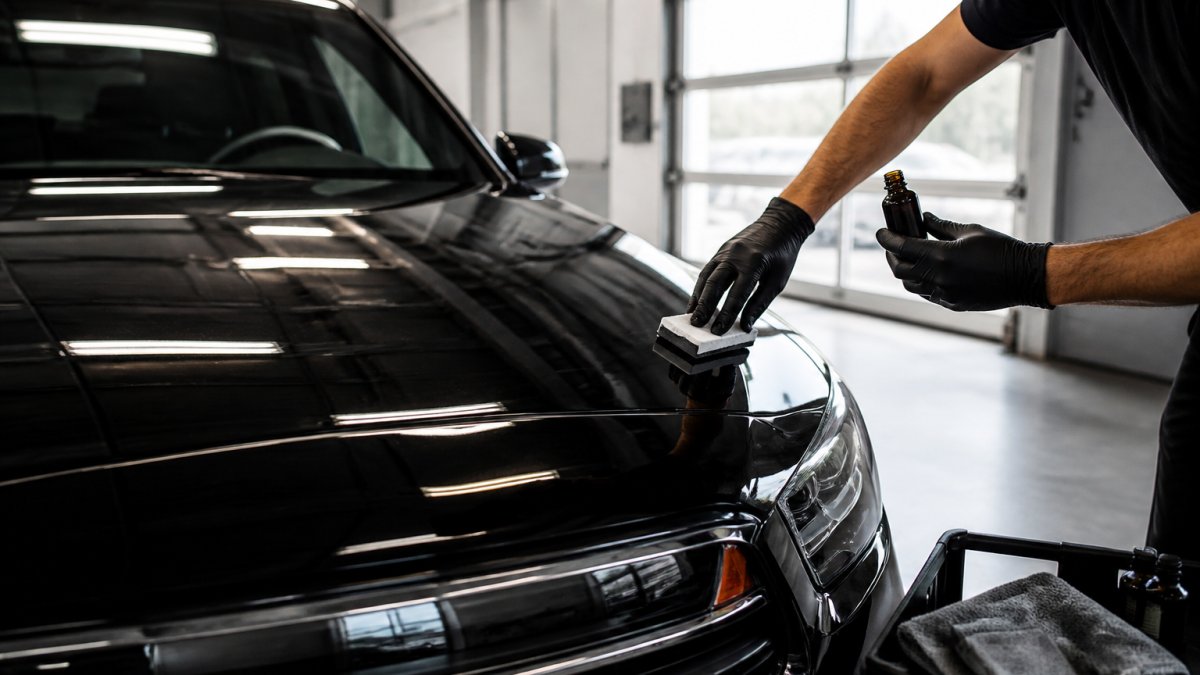
SiO2-heavy consumer coatings are the spray-and-wipe formulas sold in retail bottles.
The formula that fits your paint depends on three things: how much prep work you will do, how long you want the layer to last, and whether your car lives outside. A high-solids coating applied over contaminated paint will fail faster than a modest coating applied over corrected paint. Prep beats product every time.
Professional Ceramic Coating vs DIY: Time, Tools, and Trade-Offs
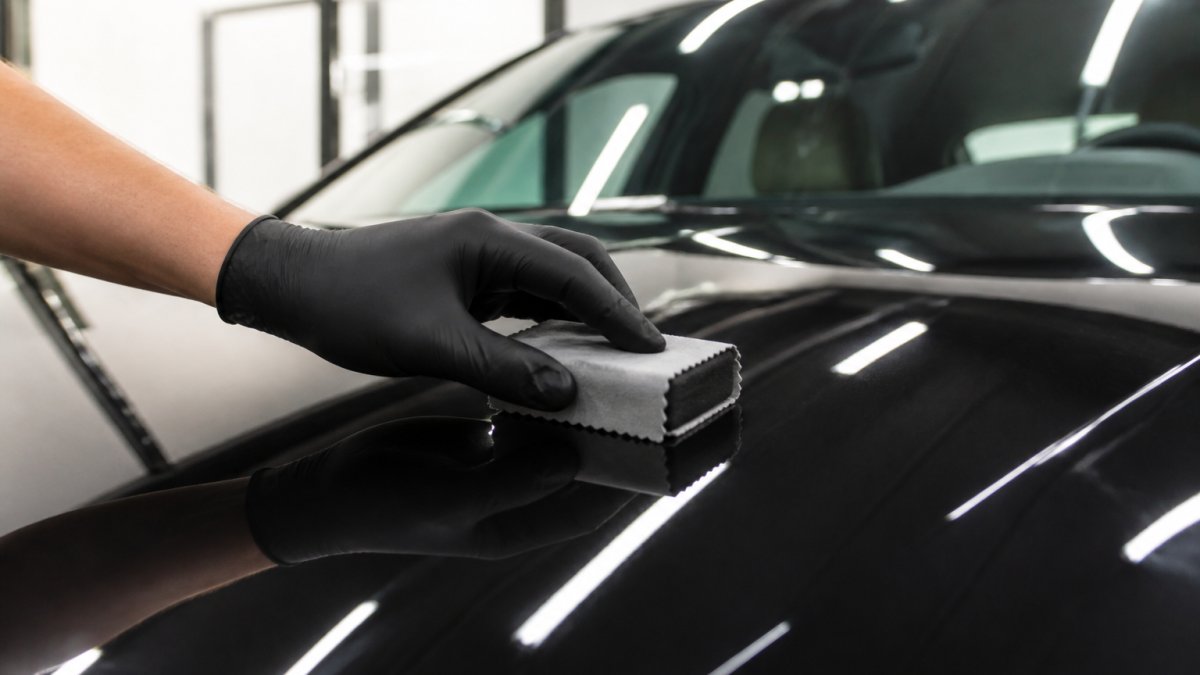
The honest answer: DIY ceramic coating is viable, but only if you own the space, the lighting, and the patience. Professional installation buys you controlled conditions and someone else's liability.
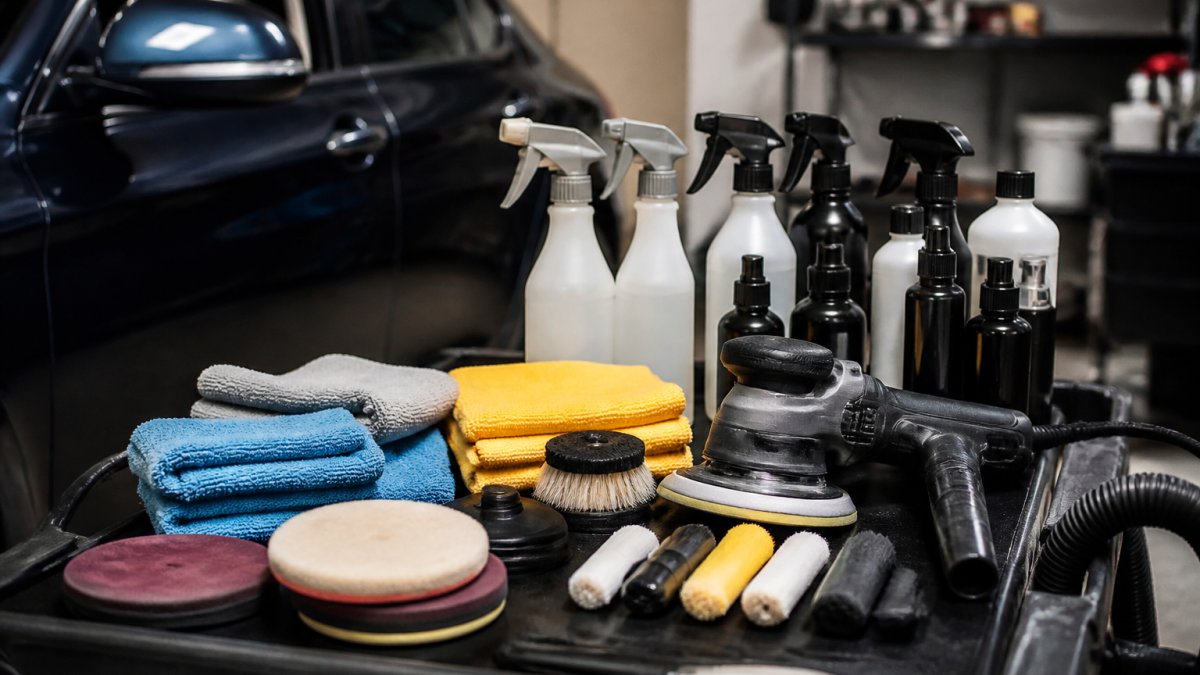
Here is what the two paths actually demand.
| Factor | DIY Coating | Professional Installation |
|---|---|---|
| Time commitment | Full day or weekend | Drop-off, usually 1-3 days |
| Surface prep | You handle wash, decon, correction | Included in most quotes |
| Environment | Needs shade, low dust, no rain | Climate-controlled bay |
| Risk of error | High spots and missed sections | Covered by installer |
| Skill required | Moderate to high | None from you |
Our self-service bays exist precisely because this gap is real. You get professional-grade products and a clean, lit space without buying a polisher, pads, and a decade of practice. If you want the coating applied for you, our team handles paint correction and installation in-house.
How Long Does Ceramic Coating Last? Real-World Durability Factors
Manufacturer claims of "years of protection" are usually measured under controlled conditions that no daily-driven car ever sees. To compare coatings honestly, you need to understand what actually degrades the layer, how durability is tested, and what the warranty really promises.
What actually breaks down a coating
A cured ceramic layer fails through four distinct mechanisms, and each one shortens lifespan differently:
- Chemical degradation from environmental load. UV exposure, acid rain, industrial fallout, bird droppings, and bug residue all attack the SiO2 matrix. A car parked outside 24/7 in a high-UV climate will see the layer degrade faster than a garage-kept car in the same region.
- Mechanical removal from washing. Automated brush washes and dirty wash media abrade the coating surface. Two-bucket washing with a pH-neutral shampoo preserves the layer; a weekly pass through a brush tunnel can wear through a consumer coating in a single season.
- Contamination clogging. Bonded iron, tar, and mineral deposits fill the microscopic pores of the coating. The layer is still physically present, but water beading drops off and the surface feels rough. This is the most common "failure" we diagnose, and it is reversible with a proper decontamination wash.
How durability is actually tested
Most "up to X years" claims come from accelerated laboratory testing, not real-world service. When you compare products, look for these test categories in the technical data sheet:
- Water contact angle and beading retention, measured before and after simulated washing cycles.
- Chemical resistance, exposure to alkaline and acidic solutions at specified concentrations and durations.
- Gloss retention, measured in gloss units before and after weathering.
A short-term demo, a fresh coating beading water on a hood, tells you almost nothing about longevity. What matters is whether the manufacturer publishes the test method, the number of cycles, and the pass criteria. If the data sheet only lists a durability number with no test conditions, treat the claim as marketing.
The variables that move real-world lifespan most
- Parking situation. Garage-kept cars consistently outlast street-parked cars. This is the single largest variable most owners can control.
- Wash technique. Touchless or two-bucket washing preserves the layer; automated brush washes destroy it.
- Coating solids content and thickness. Higher solids generally means more durability, but only when applied over properly prepared paint.
Warranty fine print that changes the real number
A "lifetime" or "10-year" warranty is only as good as its conditions. Before you pay for a premium coating, read the warranty document and check:
- Annual inspection requirements. Many warranties require a professional inspection every 12 months. Miss it, and the warranty is effectively void.
- Wash restrictions. Some warranties specify approved wash methods or products. Using a brush tunnel can void coverage.
- Exclusions. Rock chips, scratches, and damage from improper washing are almost always excluded, the warranty covers coating failure, not paint damage.
A realistic lifespan range
Most practitioners find that a quality consumer coating maintained on schedule delivers 12 to 24 months of meaningful performance, while a professional-grade coating with annual maintenance can hold up for several years. The exact number depends far more on prep, parking, and wash habits than on the label on the bottle.
Ceramic Coating Maintenance: Keeping the Layer Intact
Maintenance is where owners lose the value of their investment. A coated car still needs washing, just less aggressively and more carefully.
Wash every two to four weeks with a pH-neutral shampoo. Use the two-bucket method or a dedicated wash mitt. Dry with a plush microfiber towel or forced air. Apply a ceramic-safe topper every few months to restore slickness and water beading.
Avoid automatic brush washes entirely. Avoid harsh alkaline degreasers on the coated panels. Remove bird droppings and bug residue promptly, because their acidity etches through the layer if left in sun.
How to Choose the Best Ceramic Coating: A Decision Framework
Most coating guides list products. This one helps you decide. Work through the questions below in order, each answer narrows the field before you ever read a product label.
Step 1: What is the current condition of your paint?
Run your hand over a clean, dry panel in indirect light. If you feel grit, see swirl marks under a flashlight, or notice oxidation (a chalky, dull look), you need paint correction before any coating.
- Light swirls only: a one-step polish is usually enough.
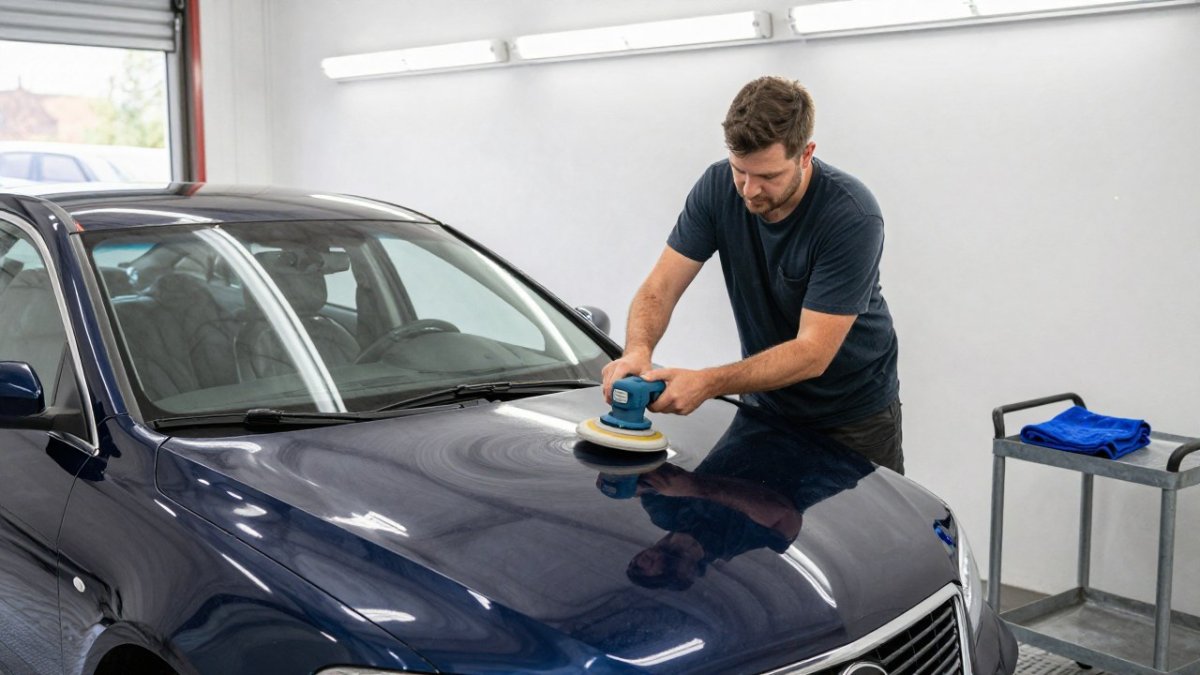
- Moderate defects: a two-step compound and polish.
- Heavy oxidation or deep scratches: professional paint correction, or accept that the coating will seal in the flaws.
If you are not prepared to correct the paint, a coating is the wrong purchase right now. A quality sealant over corrected paint beats a premium coating over contaminated paint every time.
Step 2: Who is applying it, you or a professional?
This is the biggest fork in the decision tree, and it drives both cost and outcome.
- DIY is viable if: you have a covered, low-dust space; you own or can rent a polisher; you have the patience for a full day of prep; and you accept the risk of high spots or missed sections.
- Professional installation is the better call if: you lack covered space, you are not confident with a polisher, or you want the installer to carry the liability for defects.
A middle path many owners take: rent a self-service detailing bay with professional lighting and apply a prosumer coating yourself. You get controlled conditions without paying full installation labor.
Step 3: How long will you keep the car?
Match durability to ownership period rather than buying the longest claim on the shelf.
- Leasing or selling within two years: a quality consumer coating is the better value. You will not recoup the cost of a multi-year professional coating at resale.
- Keeping the car three to five years: a prosumer coating applied over corrected paint is a sound middle ground.
- Keeping the car five-plus years: a higher-solids professional-grade coating with annual maintenance makes the most economic sense.
Step 4: What is the total cost of ownership?
The coating price is not the total cost. Build a realistic multi-year budget that includes:
- Paint correction, often the largest line item, and frequently bundled into professional quotes.
- Coating product or installation labor.
- Maintenance products, pH-neutral shampoo, decontamination chemicals, toppers, microfiber towels.
A consumer coating you apply yourself can be the lowest total cost over two years. A professional coating can be the lower cost per year over five years, but only if you actually perform the maintenance. Skipping maintenance erases the value of either path.
Step 5: What are your application conditions and compatibility requirements?
Before you buy, confirm the coating will work in your environment and over your existing surface:
- Temperature and humidity. Most coatings specify an application window, commonly around 60-80°F with moderate humidity. Applying outside that range risks curing defects.
- Curing time and IR lamps. Some professional coatings require forced curing with infrared lamps. Confirm whether your installer has the equipment.
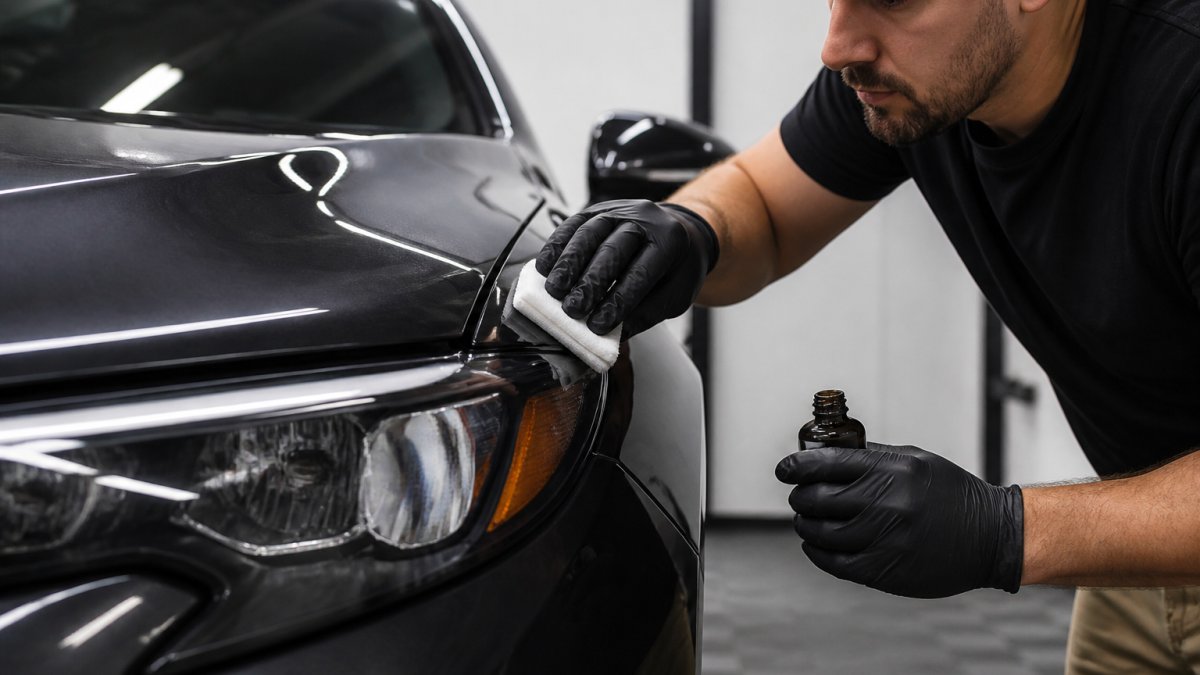
- Compatibility with existing waxes, sealants, or coatings. A coating will not bond properly over a wax or sealant. Strip existing products with a prep spray or panel wipe before application.
Step 6: Set your maintenance schedule before you buy
The coating decision is not finished until you have committed to a maintenance plan. Wash every two to four weeks with a pH-neutral shampoo, decontaminate annually, and apply a ceramic-safe topper every few months. If you are not willing to do that, or pay someone who will, choose a less expensive coating and save the premium for a future repaint or paint protection film.
What to Ignore When Comparing Ceramic Coating Products
Marketing claims deserve scrutiny. Here is what to discount.
Vague durability numbers. "Up to 10 years" means nothing without stated test conditions. Ask what the warranty actually covers and what voids it.
Hydrophobicity demos. Water beading looks impressive on a fresh coating of any grade.
Hardness ratings. The "9H pencil test" claim circulates widely and tells you almost nothing about real-world scratch resistance.
Thickness claims in microns. Consumer coatings are measured in fractions of a micron.
What actually matters: solids content, recommended application temperature, cure time, and whether the manufacturer requires a trained installer.
Frequently Asked Questions
What brand of ceramic coating is best?
There is no single best brand for every car. Look for coatings that state their concentration of active ingredient (SiO2) and provide real durability data. Professional-grade products from established manufacturers often outperform budget DIY kits. For local access to professional-grade products and expert guidance, visit The Bays O'Fallon to compare options in person.
Should I apply ceramic coating myself or hire a professional?
DIY ceramic coating can work if you have a clean, dust-free space and are comfortable with paint prep like decontamination and paint correction. Professional installation costs more but includes prep work that determines how well the coating bonds and how long it lasts. If you lack a garage or proper lighting, a professional service is the safer choice.
How long does ceramic coating last?
Durability ranges from about one year for entry-level DIY products to five or more years for professional-grade coatings, depending on the formula and how the car is stored and washed. Exposure to UV, road grime, and harsh chemicals shortens lifespan. Following the manufacturer's maintenance schedule is key to getting the full claimed life.
What should I look for when comparing ceramic coating warranties?
Read the fine print: many warranties require annual professional inspections, specific washing products, and application by an authorized installer. A warranty that voids if you wash the car yourself may not fit your routine. Ask what is actually covered (staining, peeling, water spotting) and what maintenance you must document to keep it valid.
Do I need paint correction before applying ceramic coating?
Yes, in most cases. Ceramic coating locks in whatever is on the paint, including swirl marks and scratches. A decontamination wash and paint correction step removes defects so the coating bonds to a clean surface and delivers the gloss and protection you expect. Skipping prep is the most common reason coatings underperform.
Ceramic coating rewards preparation and punishes shortcuts, and that is true whether you apply it yourself or hand the keys to a professional. If you want a clean, lit space and professional-grade products without buying a full detailing setup, The Bays O'Fallon offers self-service bays with flexible monthly memberships, plus full-service ceramic coating and paint correction from our team. Book your bay and get your paint protected properly.