 Ultimate guide
Professional Grade Detailing Tools: A Complete Guide
Last Updated: October 30, 2026
Quick Summary
Professional grade detailing tools are built for repeated use, controlled performance, and predictable results, while consumer gear is built to hit a price point for occasional weekend use. The gap shows up in motor quality and heat management, material durability, and precision control. Build your kit in tiers, starting with safe wash gear before adding a dual-action polisher.
- The essential beginner setup covers four jobs: washing, drying, interior cleaning, and protection.
- Common dual-action polisher throw sizes are 8 mm, 12 mm, 15 mm, and 21 mm.
- A 5-inch backing plate with 5.5-inch pads is the common all-around setup.
- Use the least aggressive pad and compound combination that removes the defect.
- Build your kit in tiers rather than buying everything at once.
Table of Contents
- What Separates Professional Grade Detailing Tools From Consumer Gear
- Car Detailing Tools for Beginners: The Essential Starting Setup
- Wash Gear and Exterior Cleaning Tools That Protect Paint
- Choosing a Dual-Action Polisher for Car Detailing and Paint Correction
- Car Detailing Vacuum and Extractor Setup for Interior Work
- Mobile Detailing Equipment: What Changes When You Work on the Road
- Budget Tiers, Maintenance, and Safety for a Detailing Tool Kit
- Book a Bay and Put Your Detailing Tools to Work
- Frequently Asked Questions
What Separates Professional Grade Detailing Tools From Consumer Gear
Professional grade detailing tools are built for repeated use, controlled performance, and predictable results, while consumer gear is built to hit a price point for occasional weekend use. Professional grade equipment is built to last longer and treat paint more safely than consumer gear.
The gap shows up in three places: motor quality and heat management, material durability, and precision control. A consumer dual-action polisher may bog down under pressure; a professional unit holds speed. Consumer microfiber sheds lint; quality microfiber keeps its pile after dozens of wash cycles. industry guidance on safe surface preparation from the U.S. Environmental Protection Agency also matters here, since many chemicals carry handling requirements that casual buyers overlook.
Watch out: buying the cheapest rotary buffer and jumping straight to paint correction is the fastest way to burn through clear coat. Speed control is not a luxury feature.
Car Detailing Tools for Beginners: The Essential Starting Setup
The essential beginner setup covers four jobs: washing, drying, interior cleaning, and protection. You do not need a polisher on day one. You need tools that avoid inflicting damage while you build technique.
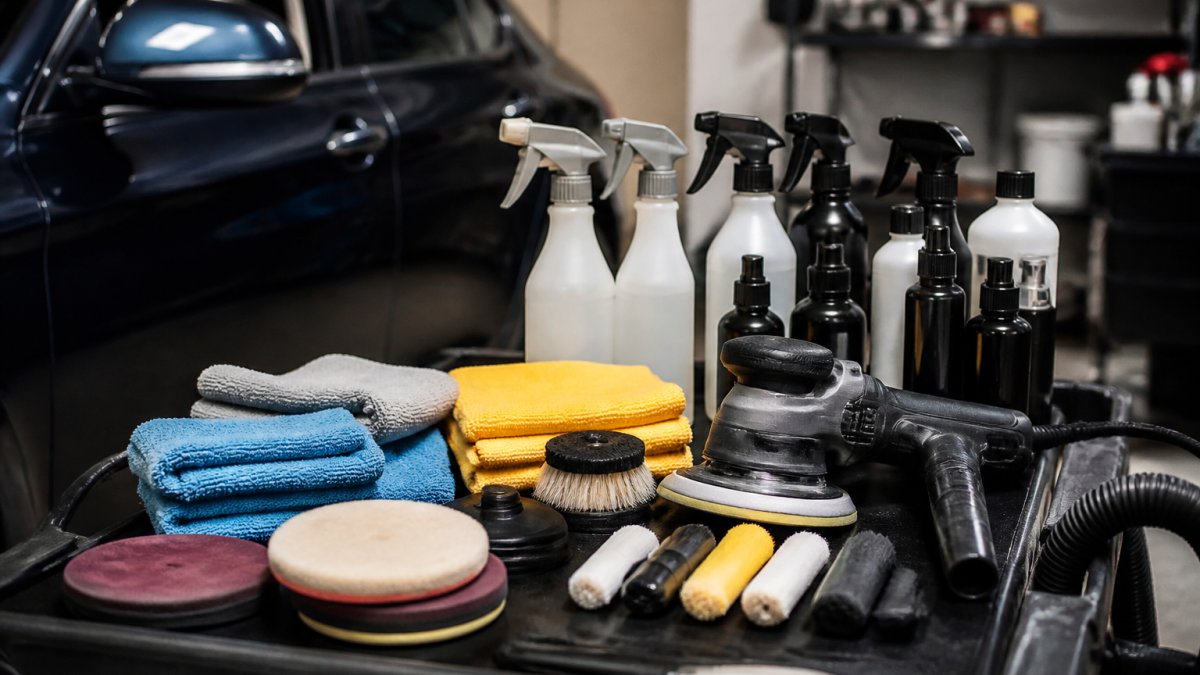
A practical starter list:
- Two buckets with grit guards
- pH-neutral car wash soap
- A quality wash mitt, not a sponge
- Several plush microfiber towels and a drying towel
- All-purpose cleaner and a dedicated interior cleaner
- Wheel brush and tire dressing
- Spray wax or sealant for protection
If you want background on what professional detailing actually involves before spending money, read our guide on what professional car detailing includes. It explains the stages so you can match tools to the work.
Wash Gear and Exterior Cleaning Tools That Protect Paint
Wash gear exists to move dirt off the surface without dragging it across the paint. That single goal should drive every purchase decision.
A pressure washer with a foam cannon speeds up pre-soak and lifts loose debris before contact. Keep the nozzle at a safe distance and use a wide fan pattern.
Watch out: dish soap strips wax and sealant. It is a habit that quietly ruins protection.
Choosing a Dual-Action Polisher for Car Detailing and Paint Correction
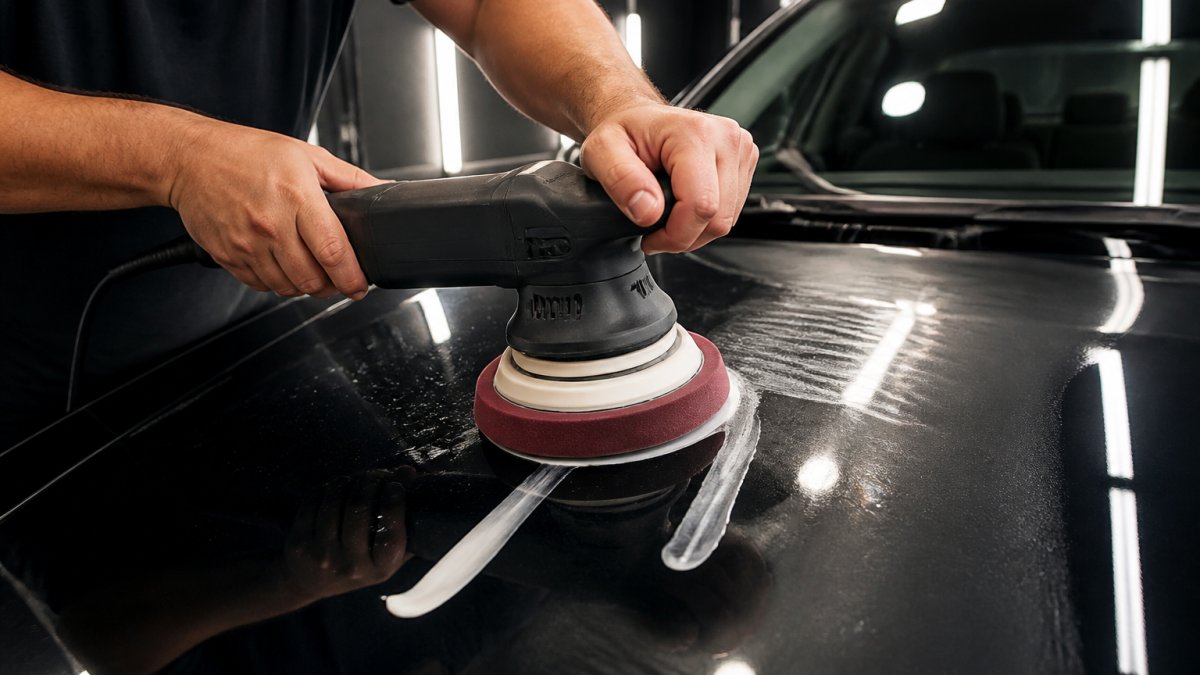
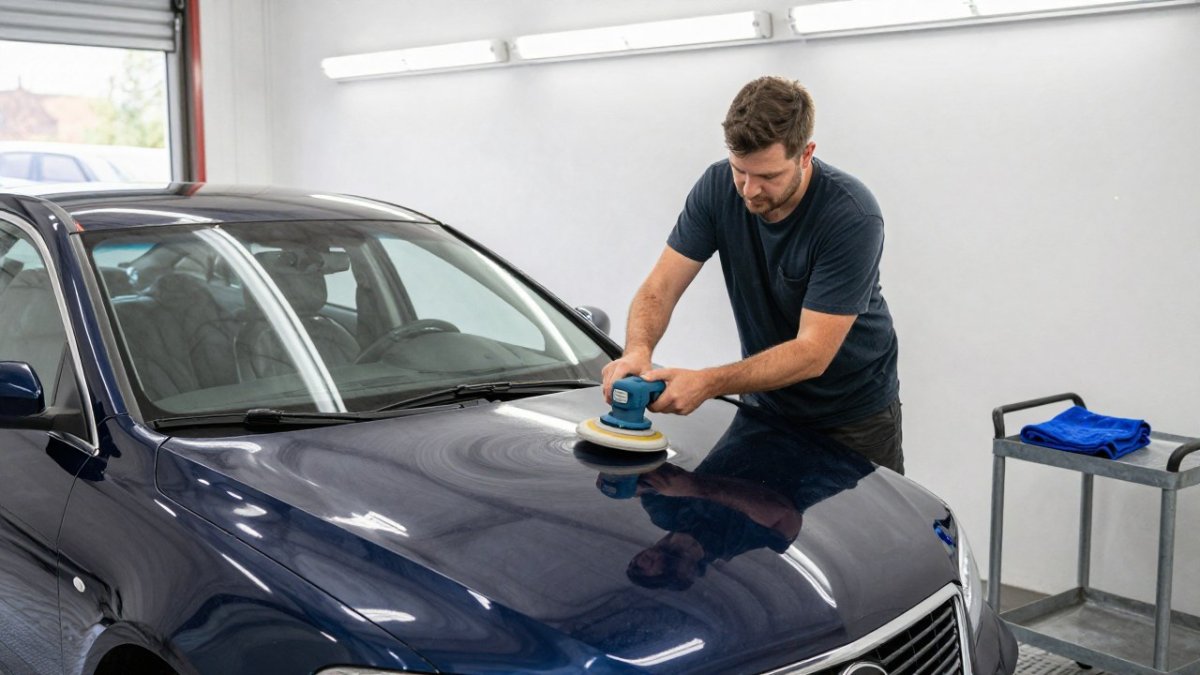
A dual-action polisher for car detailing is generally considered a gentler option for beginners than a rotary, since its spinning and oscillating motion can reduce the risk of holograms and burn-through.
Specifications that matter
- Throw (orbit size). Throw is the diameter of the orbit the pad travels. Common sizes are 8 mm, 12 mm, 15 mm, and 21 mm. Short-throw (8-12 mm) machines are controllable and good for tight panels and finishing; long-throw (15-21 mm) machines cover large panels faster and cut more aggressively. Long-throw machines demand more technique because the larger orbit generates more heat and pad movement.
- Speed settings and RPM/OPM range. Look for a variable-speed dial with a soft-start and a consistent low end. A machine that holds speed under pressure is the difference between a professional unit and a consumer one that bogs down. Most correction work happens in the low-to-mid range; the top end is for spreading product, not for cutting.
- Backing plate size. A 5-inch backing plate with 5.5-inch pads is the common all-around setup; a 3-inch plate handles pillars, bumpers, and tight areas. Match pad size to plate size, an oversized pad on a small plate destabilizes the machine.
- Weight and balance. A lighter machine reduces fatigue on vertical panels and overhead work; a heavier machine can feel more stable on horizontal panels. Balance matters more than raw weight.
- Duty cycle and heat management. Professional machines are built to run for extended sessions without overheating. If a machine's housing gets hot enough to be uncomfortable, that is a sign it is not built for repeated use.
- Cord vs. cordless. Corded machines deliver consistent power for long correction sessions; cordless units trade runtime for portability and are best for spot work or mobile setups.
Matching pads and compounds to the job
Pad and compound choice does as much work as the machine. A common three-step approach:
- Cutting pad + heavy compound for defect removal on neglected paint.
- Polishing pad + medium polish to refine the finish and remove compounding haze.
- Finishing pad + finishing polish for gloss and clarity.
Use the least aggressive combination that removes the defect, then test on a small inconspicuous area before working a full panel. Keep pads clean and swap them often, a loaded pad generates heat and stops cutting.
Upgrade path
If you are building a kit, the polisher is usually the last major purchase, not the first. Master washing, decontamination, and protection first; add a dual-action polisher once your technique is consistent. When you do upgrade, spend on the machine and backing plates before spending on a large pad inventory, pads are consumables, and a good machine outlasts several sets of them.
If paint correction feels like more than you want to take on, our team handles paint correction and ceramic coating services.
Car Detailing Vacuum and Extractor Setup for Interior Work
Interior work lives or dies on suction and agitation. A car detailing vacuum and extractor pairing handles the two jobs that matter: dry debris removal and deep cleaning of fabric.
Choose a vacuum with strong water lift and a crevice tool thin enough for seat rails. A carpet extractor injects cleaning solution and pulls it back out, which is what separates real upholstery cleaning from surface scrubbing.
Mobile Detailing Equipment: What Changes When You Work on the Road
Mobile detailing equipment has to solve for power, water, and space. Every tool you carry either earns its place or becomes dead weight. The useful way to plan a mobile setup is to compare it against a fixed shop on the four constraints that actually change tool selection.
Power
A fixed shop runs tools off wall circuits and can dedicate a circuit to a pressure washer, extractor, and polisher at the same time. A mobile setup has to size its power source to the largest simultaneous draw. In practice that means either a generator sized above the combined running load of your machines or an inverter/battery system for smaller tools. Cordless polishers and compact extractors reduce the load but add runtime limits and charging downtime.
Water
A fixed shop has unlimited water and drainage. A mobile setup carries its water and captures its wastewater. Tank size drives how many vehicles you can service before refilling, and rinse water, wash water, and extractor solution all draw from the same supply. A common pattern is to separate a clean-water tank from a wastewater tank and to use a low-flow pressure washer and foam cannon to stretch capacity.
Storage and weight
Every tool, chemical, and hose has to fit in the vehicle and stay organized between jobs. Weight distribution matters as much as total capacity, heavy items low and over the axle, frequently used tools accessible without unloading everything. Modular bins and a labeled chemical caddy save time on every job.
Noise
Generators and pressure washers are the loudest parts of a mobile setup, and noise limits vary by location and by the property you are working on. Quieter electric pressure washers and inverter generators cost more but reduce complaints and let you work in more places.
What stays the same
Lighting, drying, and organization still decide quality. A mobile setup needs portable LED work lights, a dedicated car dryer or high-quality drying towels, and a place for everything so nothing touches the ground. Fixed-shop setups can run larger compressors and dedicated drying stations; mobile setups trade that for portability.
That trade-off is exactly why a fixed bay makes sense for enthusiasts without a garage at home. You get professional-grade tools and products on site without hauling equipment.
Budget Tiers, Maintenance, and Safety for a Detailing Tool Kit
Build your kit in tiers rather than buying everything at once. A sensible progression:
| Tier | What to Buy | Why |
|---|---|---|
| Start | Buckets, soap, mitt, microfibers, interior cleaner | Covers safe washing and basic interior work |
| Build | Foam cannon, car dryer, wheel brushes, sealant | Speeds up exterior work and adds protection |
| Advance | Dual-action polisher, pads, compounds, extractor | Enables correction and deep interior cleaning |
Maintenance keeps tools performing: clean pads after every use, store chemicals out of direct sun, and check cords and fittings. On safety, ventilate when working with solvents and wear gloves and eye protection. If consistent upkeep matters more than owning everything, our self-serve membership plans offer regular bay access.
Book a Bay and Put Your Detailing Tools to Work
Owning professional-grade tools is only part of the equation; a suitable workspace matters too. The Bays O'Fallon brings retail products, self-serve detailing bays, and full-service detailing together under one roof.
You can shop pro-grade car detailing supplies in person. When you are ready to put tools to work, book a self-serve detailing bay and use professional-grade tools and products.
Get started with The Bays O'Fallon and detail your vehicle the way the pros do.
Frequently Asked Questions
What tools do professional car detailers use?
Professional detailers rely on a core set: a dual-action polisher with a range of polishing pads, a high-output vacuum and carpet extractor, a pressure washer with a foam cannon, microfiber towels sorted by task, and dedicated chemicals for paint, wheels, glass, and interiors. The tools matter less than matching each one to a specific step in the workflow, which is why detailing tools are chosen by function rather than brand.
What is the difference between a dual-action and rotary polisher?
A rotary polisher spins a single pad on one axis at high speed, which cuts defects fast but generates heat and can burn paint in unskilled hands. A dual-action polisher for car detailing oscillates and rotates the pad at the same time, spreading heat and reducing the risk of holograms or burn-through. Most beginners and many professionals use a DA for correction and finishing, reserving rotary work for heavy defect removal.
Are professional detailing tools worth the investment?
For anyone detailing regularly, yes. Professional grade detailing tools last longer, hold their performance across repeated use, and produce more consistent results than consumer gear. A dual-action polisher, a quality vacuum and extractor, and proper microfiber towels cost more upfront but replace several cheap tools that fail or damage paint. If you detail only once or twice a year, a self-service bay with shared professional equipment is often the better value.
What detailing tools should a beginner buy first?
Start with wash gear: two buckets with grit guards, a quality wash mitt, a pressure washer and foam cannon, and a set of microfiber towels for drying and wiping. Add an all-purpose cleaner and a dedicated wheel cleaner. Once washing is consistent, add a dual-action polisher and pads for paint correction. Interior tools like a vacuum and extractor come next, since interior cleaning is where most visible results show.
What equipment do I need to start detailing cars?
A starter setup covers four areas: exterior wash gear, paint correction tools, interior cleaning equipment, and microfiber care. That means buckets, a foam cannon, a DA polisher with pads and compound, a vacuum and extractor, brushes, and enough towels to never reuse a dirty one. Mobile detailing equipment adds water and power supply, which changes the tool list significantly if you plan to work away from a fixed shop.